



You don’t often get the best seat in the house to watch the shot put. Usually, it’s one of the worst, regardless of where you’re seated.
The throwing circle is normally at one end of the oval or the other. Often, it’s obscured by the infrastructure for other field events: the hammer/discus cage; or by a jumps event in progress at the same time at the same end of the field. Or the other end, given it is impossible to watch two places at the same time.
And about the last place you’d expect to find said best seat is at the Australian Short Track championships, especially when your primary role is holding a manual stop-watch on the associated 100th meeting of the Victorian Milers Club.
(Like pretty much every meeting in the world now, Milers Club utilises photo-finish timing but we still do manual times for back-up even when – as in last year’s infamous black-out race – they may not be accepted as official results.)
The Milers Club was approached by Australian Athletics about the joint project in the middle of 2025. The idea was to provide some fill-in between the heats and finals of the only track events at the short track titles, the 60 metres flat and 60 metre hurdles. In light of last year’s power failure, we had the required three watches on the major events but, of course, like umbrellas and rain, when you have three watches as back-up, you never need back-up!
Anyhow, back to the shot put. There are four throwing circles – one adjacent to each corner of the rectangular infield – at Melbourne’s Lakeside Stadium. The one used for both women’s and men’s shot was at the finish line end of the stadium on the main straight side. Right opposite us manual timekeepers, as it happened.
And from there, I noticed British thrower Scott Lincoln put the 7.2kg ball almost 21 metres out onto the infield. Twenty metres and 76 centimetres, to be precise. Related to the landmarks in my field of vision, that meant from the edge of the high jump fan out onto the grass some four metres beyond the lap counter and a photo-finish camera stand.
Viewed from that perspective, it was one of the highlights of the night. I wrote last week about my personal involvement with the Victorian Millers Club, so it was a long way short of my actual highlight of the night. On the emotion scale it ranked behind the fact that we were celebrating our hundredth at all, then behind the excellent runs by Bob Abdelrahim and Abbey Caldwell in the 800 metres, by Charles Barrett and Imogen Baker in the Victorian mile championship races and by the almost 400 athletes taking part.
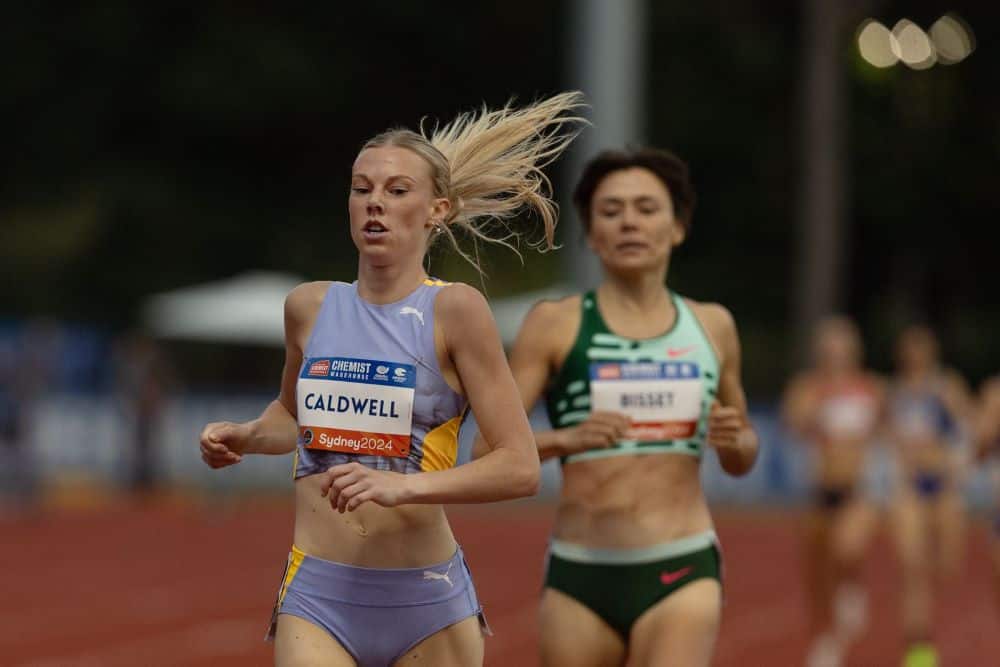
Statistics don’t measure emotion, however, but Lincoln’s throw was the equal-highest ranked performance on World Athletics rankings scores. His 20.76 was worth 1166 points, same as Michelle Jenneke’s 7.98 in the 60 metres hurdles. Abbey Caldwell’s 2:00.79 was worth 1138, Thewbelle Philp’s 7.24 in the flat 60 came in at 1137, men’s 60 dead-heaters Jai Gordon and Paias Wisil garnered 1130 for their 6.64 and Abdelrahim’s 1:46.48 came in at 1129.
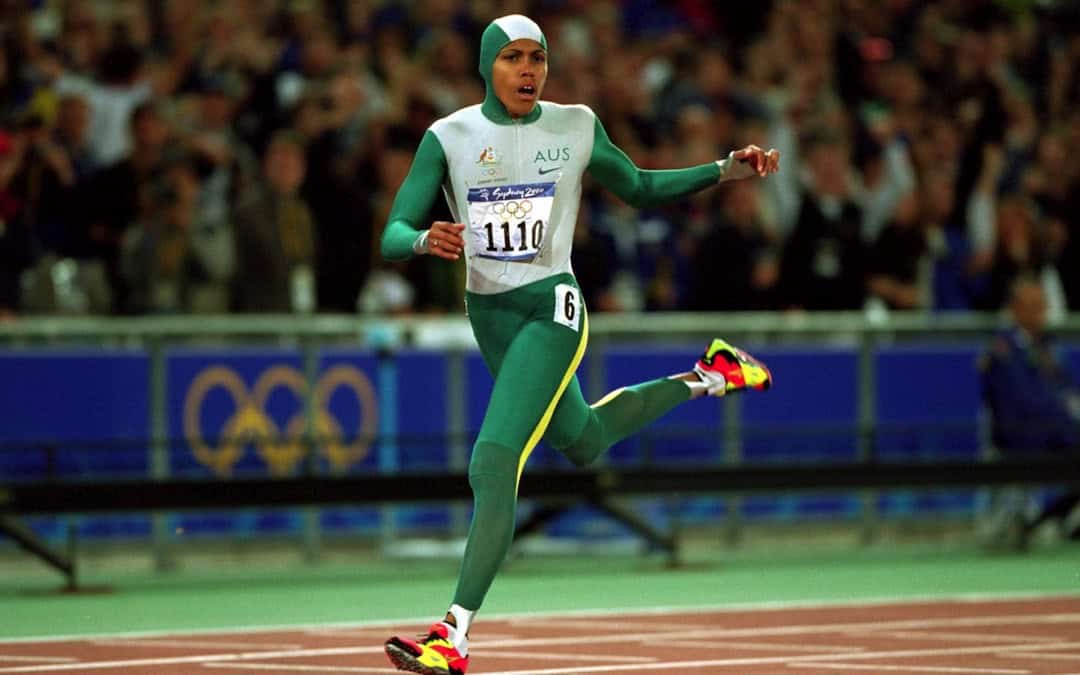
My professional career as a sports journalist aside, my lifelong interest in athletics skews towards running events, middle and long-distance events even more so. I’d be making it up if I wrote that last Saturday night’s men’s shot put will stay with me for anything like the memory of Rob de Castella’s win the men’s marathon at the first full world championships in Helsinki in 1983, any of Cathy Freeman’s gold medals in Victoria, Canada at the 1994 Commonwealth Games, in the Athens and Seville world championships of 1997 and 1999, or Sydney 2000.
Among field events, it doesn’t stand up with Dmitri Markov’s world championships victory in Edmonton in 2001, Steve Hooker’s Olympic gold medal in Beijing 2008, Nina Kennedy’s world championships gold medal in Budapest 23. Nor Kelsey-Lee Barber’s back-to-back world titles in the javelin in Doha and Eugene.
One of the charms of athletics, however, is the sport’s capacity to produce the unexpected highlight. To a greater or lesser extent all the performances just listed – and others that didn’t jump back into the front of my mind – were expected. We hoped; the athletes delivered.
The ones you weren’t looking for are often the performances that delight, however.
Again, two field event examples spring to mind. You didn’t expect Mike Powell to win the long jump at the Tokyo 1991 world championships. You didn’t expect him to beat Carl Lewis in doing so. You didn’t expect him to break Bob Beamon’s (out of this) world record. But Powell did all three.
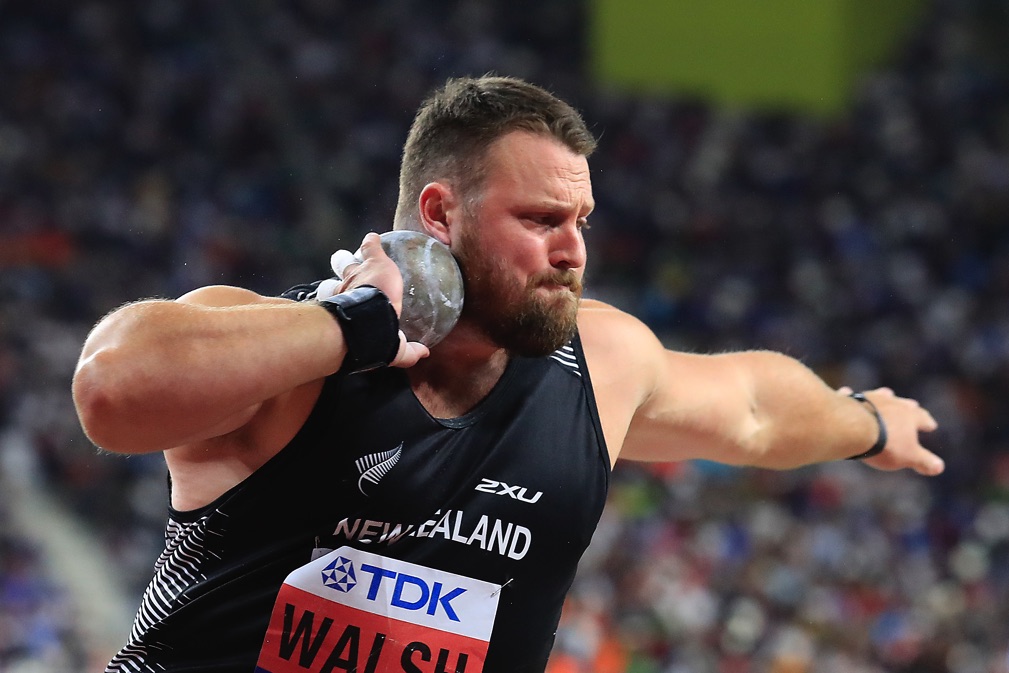
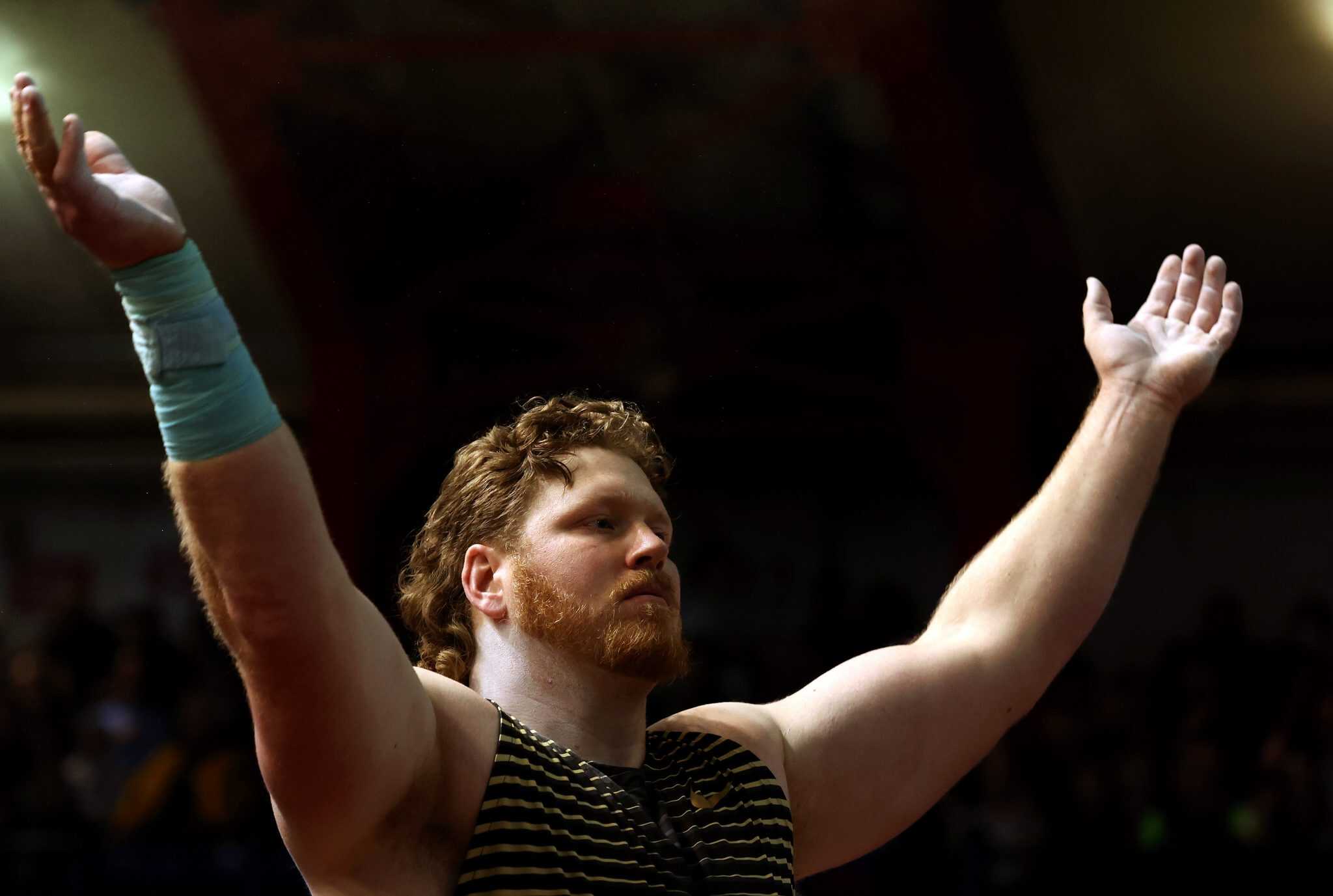
Likewise the men’s shot put was not expected to be the highlight of the second-last day of competition at the Doha 2019 world championships. But from the moment took a first-round lead with a monster 22.90 effort to the final throws of the competition when Joe Kovacs registered a 20.91 and Ryan Crouser also snuck past Walsh on countback with a 22.90 it held a packed stadium spellbound.
And who’d have thought the men’s discus in Tokyo last year would have been won – literally, almost – by the last man standing, Daniel Stahl keeping his feet and nerve through rain and several delays to take the title.
File them, and others of similar ilk, under ‘tales of the unexpected’. To that file I now add the performance of Scott Lincoln.