



Written by RT Ross (c) Runnerstribe.com
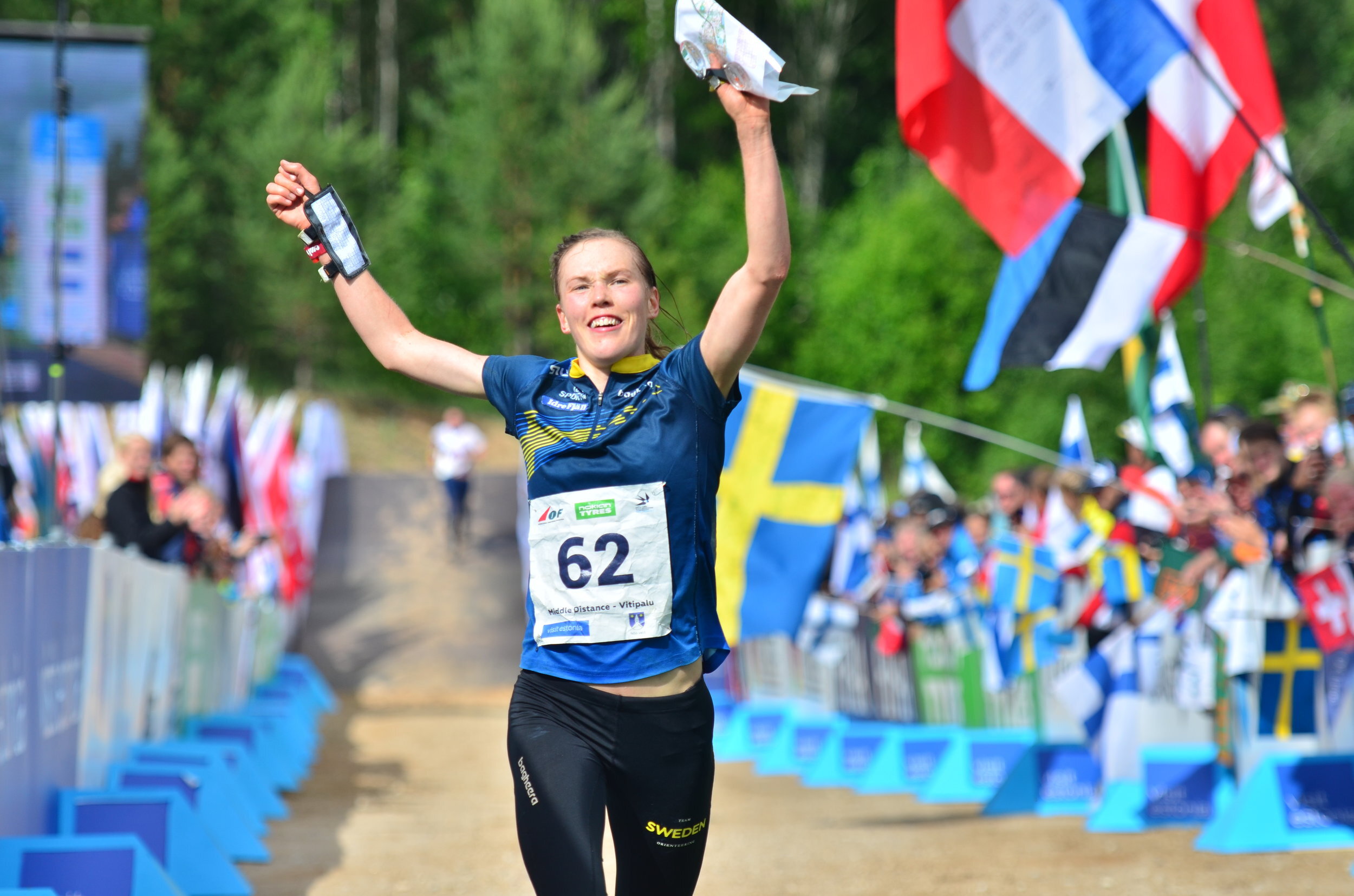
The Swedish orienteering legend who wins world championships in sports she’s never tried before. Here’s how 600 hours of annual training across six disciplines created the most versatile endurance athlete on the planet.
The Accidental Champion
“I did not have a big expectation of this race because I am new to skyraces but it was a nice day for me.”
That understated assessment came from Tove Alexandersson after she destroyed the course record by 19 minutes at the 2018 Ring of Steall Skyrace in Scotland, winning the Skyrunning World Championship in only her second skyrace ever. It was, she noted with characteristic Swedish understatement, “a fantastic course.”
This pattern repeats across Alexandersson’s career with almost comic regularity. She enters a sport she’s never competed in, wins immediately, then returns to claim a world title. In 2024, she competed in the first ever SkySnow World Championships, having never raced the discipline. She won all three gold medals available. In 2025, she showed up at the Trail World Championships Short Trail in Canfranc, Spain, with stitches in her forehead from a fall on the same course three weeks earlier, and won by 34 minutes.
At 33 years old, Alexandersson has won world championship titles in six different sports: foot orienteering, ski orienteering, skyrunning, ski mountaineering, trail running, and SkySnow. She holds 23 gold medals at the World Orienteering Championships, tying her with Simone Niggli Luder as the most successful orienteer in history. Eleven of those golds came consecutively between 2018 and 2022.
The question isn’t whether Alexandersson is talented. The question is how someone can be world class at this many different things simultaneously, and what her approach reveals about the nature of endurance excellence.

Born Into the Forest
Alexandersson was born September 7, 1992, in Sweden. Both her parents were orienteers, as were her grandparents. She competed in her first orienteering race at approximately one year old, carried in her parents’ arms through the forest.
“I grew up with orienteering, and I was in my first orienteering race when I was around one year old,” she explains. “Orienteering has always been in my life.”
In Sweden, orienteering isn’t a niche pursuit. It’s the national everyman’s sport, something people of all ages participate in throughout their lives. Alexandersson grew up surrounded by maps, compasses, and forests, developing the twin pillars of her athletic identity: an ability to move efficiently through rough terrain, and an intellectual engagement with navigation and route choice.
“I started with orienteering at a very young age,” she says. “In orienteering, you need to be able to handle all kinds of running, everything from running up and down super steep slopes in the forest to fast running on a flat road.”
Her older brother was also an orienteer, and young Tove was determined to keep up. “I always wanted to do the same as him. So I was quite early with everything. I was in front already as a kid.”
The competitive drive was apparent from the beginning, but so was something else: a genuine love of movement through natural landscapes. Cross country skiing, biking, running, and family outings in the forests all contributed to what would become an unusually broad athletic base.
The Orienteering Foundation
For those unfamiliar with the sport, orienteering involves navigating between marked waypoints using only a map and compass, choosing your own route through unfamiliar terrain. Races range from eight minutes to over two hours, requiring both sprint speed and endurance, technical precision and intuitive decision making.
“One reason why I love orienteering is that it is so varied,” Alexandersson explains. “New courses and different types of terrain. I never know what to expect. I enjoy being out in nature and orienteering is challenging both physically and mentally.”
As a child, she focused intensely on the technical elements. “I was really focused on the orienteering technique, and that was the part I enjoyed most, reading the map to really understand. I also walked a lot in the forest, so I built up a really good base with orienteering technique at an early age.”
This early mastery of moving through rough terrain while maintaining cognitive engagement would prove crucial to her later success in trail and mountain running. Where other runners must concentrate intensely on technical footing, Alexandersson finds it almost relaxing.
“To keep focus during a trail race is not a problem for me, as I’m used to orienteering races where you really need to be focused every second,” she says. “For me, trail races can be a bit boring sometimes because I don’t need to keep the focus in the same way as during orienteering races. I’m always happy when the terrain is really technical so that I have something to focus on.”

Professional Despite the Plan
Alexandersson never intended to become a professional athlete. After high school, she assumed she would continue her education and enter the workforce. But at 16, she became the 2009 Junior World Champion in the middle distance event, competing against athletes up to four years older.
“Everything went so fast, and I took the opportunity to try to do it professionally,” she recalls. “I got some sponsors and also some prize money. I really enjoy life as a professional athlete. So yeah, I’m still here.”
She defended her junior middle distance title in 2010 and 2012, adding sprint and relay golds along the way. The transition to senior competition brought several years of near misses, silvers and bronzes from 2011 through 2015 despite being among the favorites.
Then came dominance. From 2018 through 2022, Alexandersson won 11 consecutive gold medals at the World Orienteering Championships. In 2021, she won all five events at a single championship, becoming the first athlete ever to achieve this feat.
Throughout this period, she simultaneously competed at the highest level in ski orienteering, winning 10 World Championship golds and claiming the Ski Orienteering World Cup in 2016 and 2018. In December 2018, she became the first athlete ever ranked number one by the International Orienteering Federation in three separate disciplines: SkiO, FootO Sprint, and FootO Middle and Long.
The Training Architecture: 600 Hours Across Everything
Alexandersson’s training volume is substantial but not extreme by elite endurance standards: approximately 600 to 650 hours per year, spread across 9 to 12 sessions per week with one rest day.
What distinguishes her approach is the variety. Summer training emphasizes running and foot orienteering preparation. Winter shifts toward skiing, with cross country skiing, ski orienteering, and ski mountaineering all featuring prominently. Biking provides low impact volume throughout the year.
“In the winter I usually do 4 to 5 high intensity training sessions per week,” she explains. “One long session of over 3 hours, sometimes one shorter training of around 1 hour, and the rest of the sessions at easy pace for 2 to 3 hours.”
She has kept a training diary since age 15, documenting each session’s minutes, heart rate zones, distance, and whether it involved intervals, running, cycling, or other modalities. This meticulous tracking enables the kind of long term pattern recognition that supports competing across multiple sports.
The multi sport approach isn’t just a scheduling necessity. Alexandersson believes it’s fundamental to injury prevention and sustained motivation.
“To have a successful career in trail running and stay motivated while handling setbacks, I think one important thing is to have another form of training that you enjoy, which is not running,” she advises. “Trail running is really hard on the body, and if you’re just running all the time, you will probably get some injuries. I also think it’s good for motivation to have some variation in the training. I like biking, and during winter, I do a lot of skiing.”
The Accidental Skyrunner
Alexandersson’s entry into trail and mountain running came almost by accident. After the 2017 orienteering season ended in October, she traveled to Italy with friends for a vacation. Someone suggested signing up for the Limone Extreme Skyrace.
“The first longer trail race I did was in 2017,” she recalls. “It was the final in the Skyrunning World Series, and I went there together with some orienteering friends after the orienteering season. I hadn’t prepared specially for the race. It was more like a vacation and a way to try something new.”
The race was 29 kilometers with significant vertical gain, lasting nearly 3.5 hours. Alexandersson’s preparation was nonexistent, and her nutrition plan was catastrophically inadequate.
“The only energy I had with me was two really small gels, and I didn’t eat anything at the aid stations,” she admits. “I thought that would be enough for 3.5 hours, but it definitely wasn’t. I was out of energy in the end.”
She also fell repeatedly on the final descent, destroying the skin on her heels and leaving her barely able to walk for days afterward. “My body was totally destroyed. I had to go in a wheelchair for some days, and when I came home, I couldn’t stand on my legs at all for a week. The thick skin under the heels and under the toes was totally gone, and also my ankles were super swollen.”
Despite all this, she won. By nearly 12 minutes.
“Of course, my legs and muscles were destroyed as well, but I didn’t feel that so much because I couldn’t use the muscles anyway because I couldn’t stand,” she says with characteristic dryness.
At the finish line, she swore never to do a trail race again. Three days later, she was looking at the calendar for her next one.
The Learning Curve
What separates Alexandersson from a talented amateur is her capacity to learn from mistakes and systematically address weaknesses. After the Limone debacle, she refined her approach.
For the 2018 Ring of Steall Skyrace at the Skyrunning World Championships in Scotland, she did specific running preparation in the two weeks before the event. More importantly, she brought adequate nutrition.
“I had many more gels with me so I could have energy all the way to the finish,” she notes.
The result: a course record by 19 minutes, victory by over 7 minutes, and a world championship in only her second skyrace. Looking fresh and relaxed at the finish, she offered her famous understatement about the nice day.
Later that year, she returned to Limone Extreme and won again, by 9 minutes. She remained undefeated in skyrunning through her first three races.
The pattern established itself: Alexandersson would identify the specific demands of a new discipline, make targeted adjustments, and then dominate. Her orienteering base provided the foundation, but her systematic approach to filling gaps enabled transfer across sports.
The 2025 Trail World Championships Campaign
Alexandersson’s 2025 Trail World Championships Short Trail victory represented something new: the first trail race she truly prioritized in her training.
Previous trail racing had always fit around orienteering season, squeezed into late October or November when the primary focus had passed. For Canfranc, she committed to genuine preparation.
Three weeks before the World Championships, she traveled to Canfranc with Team Sweden for a training camp to recce the course and build race specific fitness. While out on the trails, she noticed course flagging and discovered the Canfranc Canfranc Marathon was happening that weekend on the same route.
Despite initial hesitation, she signed up. “I was thinking, ‘Is it good for me to run it or is it just stupid?’ But I was a bit curious to see how I would handle the distance because I had never run such a long race before.”
The reconnaissance race went well until the second descent, a steep grassy slope with hidden rocks. Alexandersson fell hard, opening a gash on her forehead that bled profusely.
“My first thought was just, ‘Now I have to quit the race. Why should I fall? I really wanted to run the whole course!'” she recalls.
After determining the cut wasn’t as bad as the blood suggested, her frustration shifted to the time being lost. Medical personnel stitched her up in under 20 minutes, and she continued to win the race and set a new course record.
Three weeks later, she arrived at the Trail World Championships start line with a bandage still visible on her forehead. She led from the top of the first climb, opening a three minute gap by 6.6 kilometers into the race. On the descent where she’d fallen previously, she admits to being “careful there and when I had no falls, I was quite happy thinking, ‘Ok, at least it’s better than last time.'”
By the finish, she was 34 minutes ahead of second place, 17th overall in a combined field with the men. It was, she assessed, about as good as it could have been.
“I had no problems or struggles at all. I don’t think it could have been so much better.”

The Transfer Effect
Why does Alexandersson’s orienteering background translate so effectively to trail running? Several factors align:
Technical terrain mastery. Orienteers spend their careers running through rough forest at speed, reading ground conditions while maintaining pace. The technical descents that challenge pure runners are comfortable terrain for someone who’s been navigating roots, rocks, and undergrowth since childhood.
Cognitive load tolerance. Orienteering requires constant decision making while exercising at high intensity. Trail races, by comparison, offer straightforward navigation. Alexandersson can devote more mental bandwidth to pacing and physical execution because she’s not using cognitive resources on route finding.
Downhill confidence. “On the downhill you have to be so focused. I think that’s my biggest strength so I had a good feeling,” she noted after Ring of Steall. Years of charging through forest terrain built the proprioception and confidence that translate directly to fast technical descents.
Multi terrain adaptability. Orienteering varies constantly: flat roads to steep forest, soft ground to rocky outcrops. This builds the neuromuscular versatility that trail racing demands.
Competition density tolerance. Elite orienteers compete frequently throughout the season, often racing multiple days in succession. This builds the ability to perform at high level without perfect freshness, useful for championships with multiple events.
The Joy Factor
Despite her systematic approach to training and competition, Alexandersson consistently emphasizes enjoyment as foundational to her success.
“The most important for me is to enjoy the training,” she states simply. When asked about her favorite type of training, she’s quick to answer: “I really like to run up to mountain summits. Also, fast running.”
This joy orientation extends to competition itself. Asked about maintaining focus during long races, she notes that orienteering’s constant cognitive demands make trail races feel almost relaxing by comparison. The challenge becomes a form of play.
“I’m always happy when the terrain is really technical so that I have something to focus on. Of course, the terrain can be really technical and challenging sometimes, but I really like that!”
The multi sport approach supports this mindset. Rather than grinding away at a single discipline until motivation fades, Alexandersson rotates through activities that genuinely interest her. Skiing in winter feels like a break from running. Trail racing after orienteering season feels like an adventure. Each sport refreshes enthusiasm for the others.
“It was nice to get some skiing and not just running,” she said after pivoting from the Trail World Championships to ski mountaineering training. “So at least it’s some rest from running.”
The Competitive Advantage of Multi Sport Training
Alexandersson’s approach challenges the conventional wisdom that elite performance requires single minded specialization. Her experience suggests that strategic variety might actually enhance rather than limit peak performance.
Injury prevention. Different sports load the body differently. By distributing training stress across running, skiing, and biking, Alexandersson reduces the repetitive strain that sidelines pure runners.
Mental freshness. Alternating between sports prevents the psychological staleness that accompanies year round focus on a single discipline.
Cross training transfer. Skills developed in one sport often benefit others. The explosive power from ski mountaineering likely contributes to trail running climbing ability. The aerobic base from long ski sessions supports running endurance.
Perspective maintenance. Competing across multiple sports provides natural benchmarks and humility. Success in one discipline doesn’t guarantee success in another, which keeps ego in check and curiosity alive.
The limiting factor for most athletes considering this approach is Alexandersson’s unusual circumstance: orienteering and ski orienteering have been her primary sports, with trail running and skyrunning fitting into the calendar around those seasons. Few athletes have the opportunity or sponsorship support to compete seriously across multiple disciplines.
What Comes Next
The 2025 Trail World Championships appears to have sparked increased interest in trail racing. Alexandersson has mentioned Sierre Zinal and the Zegama Marathon as events she’d like to try. Both would suit her strengths: technical terrain, significant climbing, and distances that don’t require the extreme duration adaptation of 100 mile races.
But first, she’s focused on ski mountaineering and qualifying Sweden for the 2026 Winter Olympics. Then comes orienteering season. Trail running, for now, remains fitted around her primary pursuits.
“For the moment, I don’t have any big goals in trail running, but I’m planning to focus a bit more on trail running in a few years,” she says. “However, next season, orienteering will still be my main focus.”
The trail running world can only wonder what she might achieve if trail racing ever becomes her primary sport. A 34 minute winning margin at a World Championship, achieved with trail running as a secondary focus, suggests the ceiling is very high indeed.
Key Training Insights
Annual volume: 600 to 650 hours per year
Weekly structure: 9 to 12 sessions per week, one rest day
Winter intensity: 4 to 5 high intensity sessions per week, including one long session over 3 hours
Modalities: Running, skiing (cross country, ski mountaineering, ski orienteering), biking, orienteering specific training
Documentation: Training diary since age 15 tracking minutes, heart rate zones, distance, and session type
Nutrition lesson: Early trail races taught the importance of adequate fueling. “I thought two gels would be enough for 3.5 hours, but it definitely wasn’t.”
Recovery philosophy: Multi sport rotation provides active recovery. Different activities load the body differently.
Mental approach: “The most important for me is to enjoy the training.” Competition focus comes naturally from orienteering background.
Career Highlights
Foot Orienteering: 23 World Championship gold medals (tied most ever) 11 consecutive WOC golds (2018 to 2022) 9 consecutive World Cup overall victories (2014 to 2023) 2009 Junior World Champion at age 16
Ski Orienteering: 10 World Championship gold medals World Cup winner 2016, 2018 IOF SkiO Athlete of the Year 2018
Skyrunning: 2018 World Champion (Sky category) Ring of Steall Skyrace course record by 19 minutes 2017, 2018 Limone Extreme winner Undefeated in first three skyraces
Trail Running: 2025 Trail World Championships Short Trail gold (34 minute margin) 2023 World Mountain Running Championships silver (Up and Down) 2025 Canfranc Canfranc Marathon course record
Ski Mountaineering: 2025 World Championship gold (individual) 2025 World Championship silver (vertical) 2024 European Championship gold (individual) 2021 World Championship gold (combined)
SkySnow: 2024 World Championship: 3 gold medals (Vertical, Classic, Combined) in first ever event
Awards: Swedish Sportswoman of the Year 2019 Svenska Dagbladet Gold Medal 2019 Jerring Award 2020 H.M. The King’s Medal 2022
What We Can Learn
Alexandersson’s career offers several insights for endurance athletes at any level:
Technical skills compound over time. Her decades of orienteering created movement capabilities that transfer to any trail environment. Investing in technical terrain practice pays dividends across disciplines.
Variety supports longevity. Multi sport training reduces injury risk and maintains motivation. Even athletes focused on a single sport can benefit from cross training variety.
Enjoyment drives excellence. Alexandersson consistently emphasizes that training should be fun. Her joy in mountain summits and fast running sustains the consistency that produces results.
Learning from failure accelerates growth. Her disastrous first ultramarathon, with inadequate nutrition and destroyed feet, provided the lessons that enabled subsequent dominance.
Cognitive engagement enhances physical performance. The mental demands of orienteering make trail racing feel almost simple by comparison, freeing resources for physical execution.
Understatement is underrated. “It was a nice day” might be the most Swedish thing ever said after winning a world championship by 19 minutes. The ability to stay calm under pressure serves well in endurance competition.
Primary Sources (Direct Interviews and Profiles)
- iRunFar. (2025). “From Orienteering to 2025 Short Trail World Champ: A Conversation with Tove Alexandersson.” https://www.irunfar.com/tove-alexandersson-profile
- Runner’s Tribe. (2024). “RT Snap Q & A Series: Tove Alexandersson | Trail, Skyrunning, and Orienteering – The Multidisciplinary Champion Dominating Endurance Sports.” https://runnerstribe.com/features/rt-snap-q-a-series-tove-alexandersson-trail-skyrunning-and-orienteering-the-multidisciplinary-champion-dominating-endurance-sports/
- International Orienteering Federation. (2018). “Foot Orienteering Athlete of the Year: Tove Alexandersson.” https://orienteering.sport/foot-orienteering-atlethe-of-the-year-tove-alexandersson/
- International Orienteering Federation. (2018). “Ski Orienteering Athlete of the Year: Tove Alexandersson.” https://orienteering.sport/ski-orienteering-athlete-of-the-year-tove-alexandersson/
- Silva Sweden. “Tove Alexandersson – Silva Athlete since 2014.” https://silva.se/family/tove-alexandersson/
- Silva USA. “Tove Alexandersson.” https://silva-usa.com/blogs/individual-athletes/tove-alexandersson
Biographical and Background
- Wikipedia. “Tove Alexandersson.” https://en.wikipedia.org/wiki/Tove_Alexandersson
- Grokipedia. “Tove Alexandersson.” https://grokipedia.com/page/tove_alexandersson
- Liquipedia Lab Wiki. “Tove Alexandersson.” https://liquipedia.net/lab/Orienteering/Tove_Alexandersson
Race Results and Coverage
- iRunFar. (2025). “2025 Trail World Championships Short Trail Results: Tove Alexandersson, Frédéric Tranchand Triumph.” https://www.irunfar.com/2025-trail-world-championships-short-trail-results
- iRunFar. (2026). “Every Surface, Any Distance: Top Ultramarathon Performances of 2025.” https://www.irunfar.com/top-2025-ultramarathon-performances
- iRunFar. (2026). “The Best of iRunFar in 2025.” https://www.irunfar.com/the-best-of-irunfar-in-2025
- LetsRun.com. (2025). “Sweden’s Tove Alexandersson Wins World Championship Short Trail by 34 minutes.” https://www.letsrun.com/forum/flat_read.php?thread=13797259
- UTMB World. “Tove Alexandersson Race Results and UTMB Index.” https://utmb.world/runner/1719133.tove.alexandersson
- ITRA. “Tove Alexandersson.” https://itra.run/RunnerSpace/ALEXANDERSSON.Tove/1719133
Skyrunning World Championships 2018
- International Skyrunning Federation. (2018). “Jornet and Alexandersson take the Sky.” https://www.skyrunning.com/jornet-and-alexandersson-take-the-sky/
- iRunFar. (2018). “2018 Ring of Steall Skyrace Results.” https://www.irunfar.com/2018-ring-of-steall-skyrace-results
- Salomon. (2018). “Kilian Jornet Wins Ring of Steall Skyrace in Scotland.” https://www.salomon.com/en-us/blog/kilian-jornet-wins-ring-of-steall-skyrace-scotland
- UK Climbing. (2018). “Kilian Jornet and Tove Alexandersson Are SKY World Champs With Ring of Steall Records.” https://www.ukclimbing.com/news/2018/09/kilian_jornet_and_tove_alexandersson_are_sky_world_champs_with_ring_of_steall_records-71709
- Sleep Monsters. (2018). “Kilian Jornet and Tove Alexandersson Crowned SKY World Champions.” https://sleepmonsters.com/races.php?article_id=10349
- Ian Corless. “Tove Alexandersson.” https://iancorless.org/tag/tove-alexandersson/
- Wikipedia. “Skyline Scotland.” https://en.wikipedia.org/wiki/Skyline_Scotland
Training Information
- Silva Sweden/USA. Training volume data: “Approximately 600 to 650 hours per year or 9 to 12 sessions per week. Each week I have 1 rest day when I’m off duty.”
- IOF. Training structure: “In the winter I usually do 4 to 5 high intensity training sessions per week. One long session of over 3 hours, sometimes one shorter training of around 1 hour, and the rest of the sessions at easy pace for 2 to 3 hours.”
- iRunFar profile. Favorite training: “I really like to run up to mountain summits. Also, fast running.”
Key Data Points and Source Attribution
| Data Point | Source |
|---|---|
| Born September 7, 1992 | Wikipedia |
| 23 World Orienteering Championship gold medals (tied most ever) | Wikipedia, iRunFar |
| 11 consecutive WOC gold medals (2018 to 2022) | Wikipedia |
| 10 World Ski Orienteering Championship gold medals | Wikipedia |
| World champion in 6 different sports | iRunFar, Wikipedia |
| First orienteering race at age 1 | iRunFar, Runner’s Tribe |
| Junior World Champion 2009 (age 16) | Wikipedia |
| 600 to 650 training hours per year | Silva |
| 9 to 12 sessions per week | Silva |
| 4 to 5 high intensity sessions per week (winter) | IOF |
| 2017 Limone Extreme first trail race | iRunFar, Wikipedia |
| Won 2017 Limone Extreme by 12 minutes | iRunFar |
| 2018 Ring of Steall Skyrace win: 3:46:28 | iRunFar, multiple sources |
| Course record by 19 minutes at Ring of Steall | Wikipedia, multiple sources |
| 2018 Skyrunning World Champion (Sky) | Multiple sources |
| 2020 Volcanoes Trail 23K winner | Wikipedia |
| 2023 World Mountain Running Championships 2nd (Up and Down) | Wikipedia |
| 2024 SkySnow World Championships: 3 gold medals (first event ever) | Wikipedia |
| 2024 European Championships Ski Mountaineering winner | Wikipedia |
| 2025 World Championships Ski Mountaineering winner | Wikipedia |
| 2025 Trail World Championships Short Trail winner | iRunFar, multiple sources |
| Won Short Trail by 34 minutes, 17th overall | iRunFar |
| Canfranc Canfranc Marathon 2025 (3 weeks before World Champs) | iRunFar |
| Fall requiring stitches at Canfranc Canfranc | iRunFar |
| Training camp Bormio for ski mountaineering after Trail Worlds | iRunFar |
| Svenska Dagbladet Gold Medal 2019 | Wikipedia |
| Jerring Award 2020 | Wikipedia |
| Swedish Sportswoman of the Year 2019 | Wikipedia |
| H.M. The King’s Medal 2022 | Wikipedia |
| Competes for Stora Tuna OK (orienteering) | Wikipedia |
| Competes for Alfta Ösa OK (ski orienteering) | Wikipedia |
| Training diary since age 15 | Silva |
Related Athletes and Comparisons
- Simone Niggli Luder: Tied with Alexandersson for most WOC gold medals (23)
- Kilian Jornet: Won 2018 Ring of Steall Skyrace same day as Alexandersson
Awards and Honors
- Svenska Dagbladet Gold Medal (December 2019)
- Jerring Award (January 2020)
- Swedish Sportswoman of the Year 2019
- H.M. The King’s Medal for contributions to orienteering, ski orienteering, and skyrunning (2022)
- IOF Foot Orienteering Athlete of the Year (2018)
- IOF Ski Orienteering Athlete of the Year (2018)
Clubs and Teams
- Stora Tuna OK (foot orienteering)
- Alfta Ösa OK (ski orienteering)
- Team Sweden (World Championships)
Sports Competed (World Championship Level)
- Foot Orienteering (23 gold medals)
- Ski Orienteering (10 gold medals)
- Skyrunning (2018 World Champion)
- Ski Mountaineering (2025 World Champion)
- Trail Running (2025 World Champion, Short Trail)
- SkySnow (2024 World Champion, 3 golds)
- Mountain Running (2023 silver, Up and Down)