

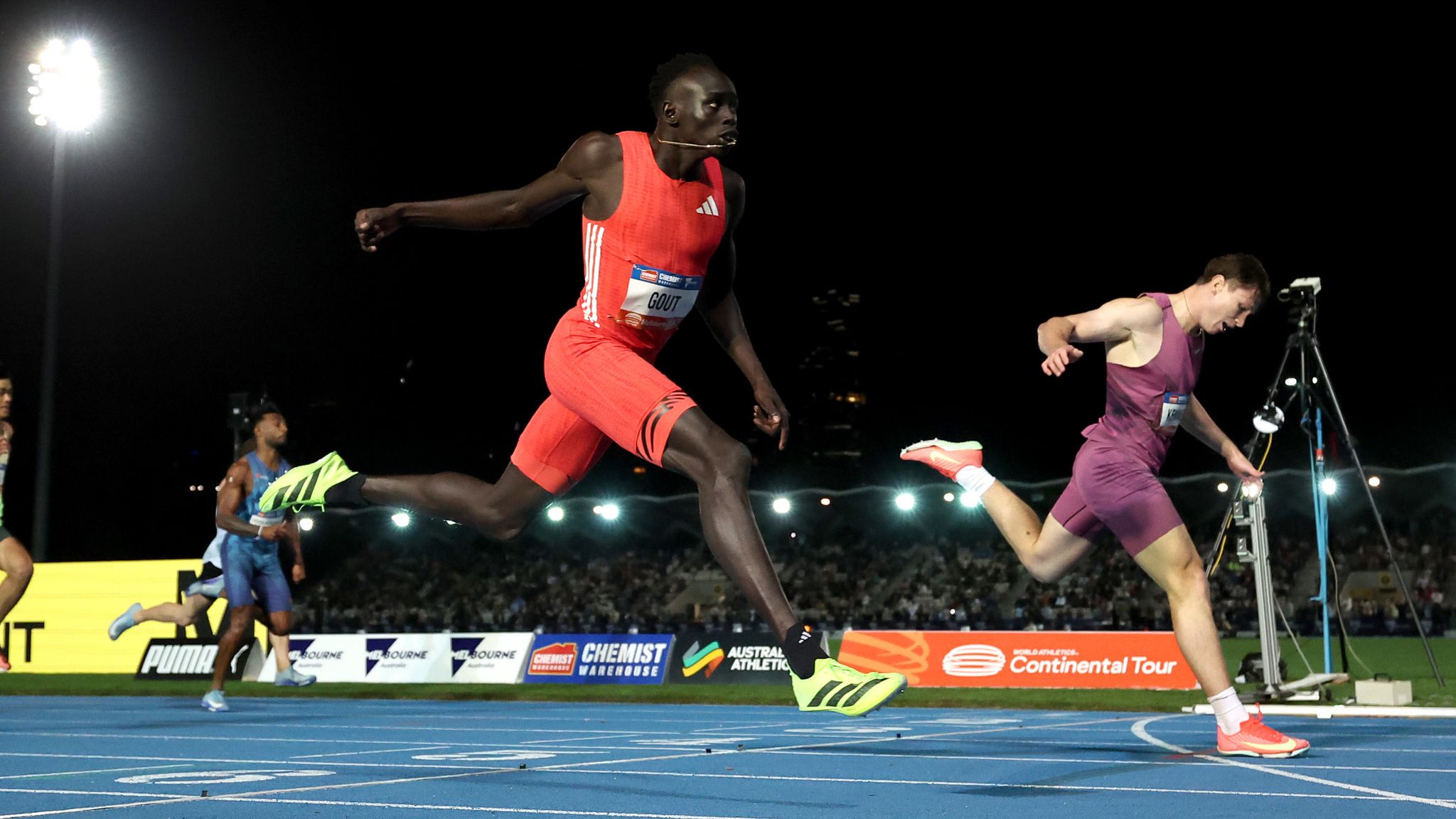


Aah, Melbourne: one weekend you’re sitting inside watching the world indoors after spending the day basking in beautiful autumnal; the next, you’re wondering how many layers to wear to ward off the expected cold – and perhaps rain – as Melbourne’s annual track classic kicks off the World Athletics Continental Tour Gold series.
These days the Melbourne classic runs under the title of the Maurie Plant Meeting. Like the weather, Maurie could be mercurial, mostly genial but also liable to give anyone judged to have crossed him a withering spray. More than once he dismissed some unworthy with a phrase I first heard employed by the great multi-eventer Daley Thompson: “The trouble with you is you know nothing about athletics.”
Anyway, Maurie is sadly gone but Melbourne’s weather remains. Or rather, doesn’t remain, which is the problem in a nutshell, prompting the old joke that if you don’t like the weather now, just wait a minute and it will be different. Melbourne weather is nothing if not perverse, however: let’s just hope that on 28 March 2026 that perversity is/was expressed by being, if not good, then not at the extreme of the predicted bad.
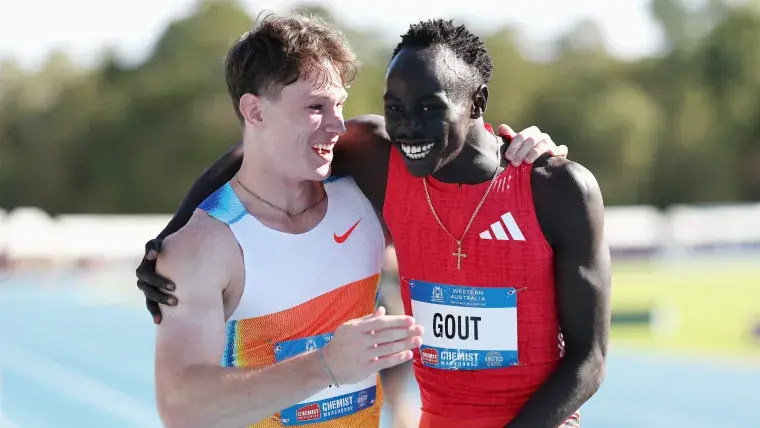
It will be cold, maybe wet, too. There may be headwinds for the sprints. Whatever happens, sprinters Gout Gout and Lachie Kennedy, 400 metres men Jacory Patterson, Reece Holder and Aidan Murphy, vertical jumpers Nicola Olyslagers and Nina Kennedy – in short, anyone whose performance relies on a bit of explosive ‘pop’ – will need to keep hamstrings warm and stretched.
Writing about the world indoor championships last time I observed that the event was hard to categorise. The world of indoor athletics, short-track athletics as no-one other than World Athletics now knows it is a small circle inside the much larger one of outdoor athletics. Modern track design means it’s a far easier transition from the 400-metre to the 200-metre oval, but some still struggle to adapt first time to the banked bends of the latter (just ask Bob Abdelrahim, DQed for a lane infraction in his very first indoor race in the 800 heats).
But it was more the inconsistency between events to which I referred. At an Olympics or an outdoor world championships pretty much every event is as strong as it can practically be – only the injured or hopelessly out of form are missing, and usually a few of them turn up for a desperate roll of the dice. Not so of the world indoors. Athletes, and sometimes whole federations, are fickle in their support.
So it was that in Poland last weekend, for every strong event there was another that was correspondingly weak. The women’s high jump – Yaroslava Mahuchikh, Nicola Olyslagers, Angelina Topic, Yulia Levshenko, Maria Zodzik and Eleanor Patterson – had a field worthy of an Olympic or world championship final; so, too, the men’s pole vault – Mondo (no second name required), Emmanouil Karalis, Kurtis Marschall – was likewise loaded.
Other events were lacklustre at best. Of course, it’s athletics we’re talking about, so some of these produced great competition. The sprints were just so-so, with due respect to the winners; the field events are truncated anyway – shot put is the only throwing event contested. The multis are a different world, what even are men’s heptathlon and women’s pentathlon? And if we’re going to have cut-down versions, why do a men’s event over two days and a women’s in just one?
And please don’t get me started on the 400, where there were two finals with the medals decided by merged times. I understand why it is now reckoned that banked turns make some lanes impossible to win from, but if that’s the case why not cut the event as has already happened with the 200. Anything is better than medals awarded and places determined on a race that was never actually run.
And, not to kick the 400 while it’s down, do we really need a 4×400 relay when the world relays is coming up six weeks later?
Also as previewed, the championships were great entertainment. As ever, so much happening at once, but only one incident (I think) when only the quick action of an official prevented a long jump competitor running through the pit on their warm-up from continuing onto the track and cleaning up a middle-distance field.
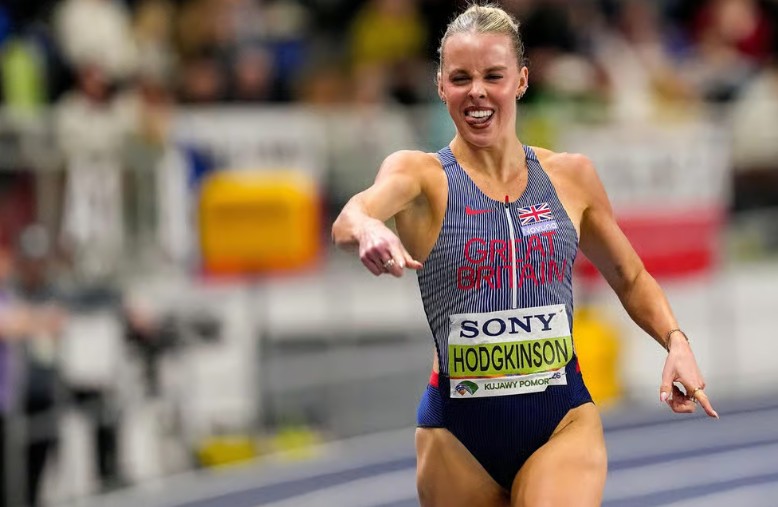
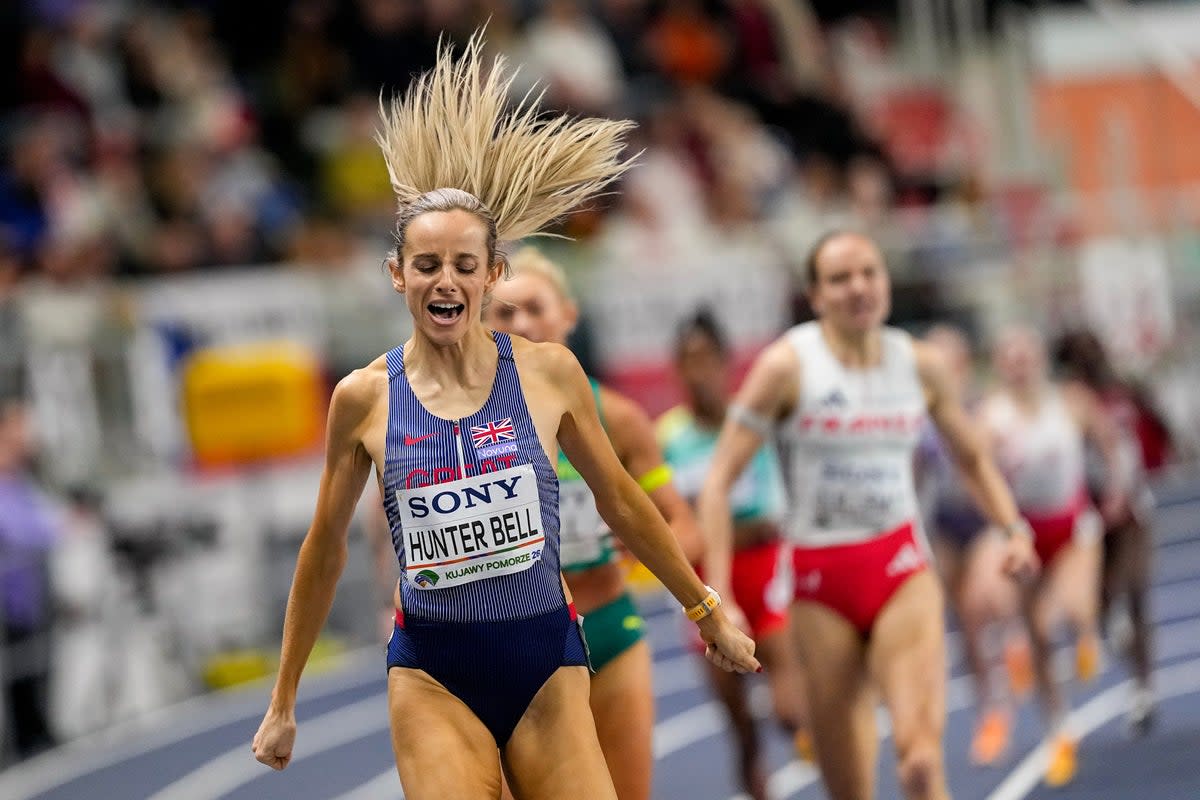
Keely Hodgkinson was as imperious in winning the women’s 800 as Cooper Lutkenhaus was precocious in winning the men’s. Josh Kerr put the horror of last year’s world championships (where he tailed off last after pinging his calf) behind him in defeating a strangely tactically inept Cole Hocker in the men’s 3000 and Georgia Hunter-Bell took the women’s 1500 giving Britain a women’s middle-distance double.
Adam Spencer ran most of the men’s 1500 final hemmed in on the inside mid-way in the field. But he didn’t panic and when the gap opened up he dashed through on his way to a bronze medal – almost all of which happened in the last 25 metres.
And then, of course, there’s Jess Hull. As in Tokyo last year, Hull doubled, 800 and 1500 then, 1500 and 3000 now. In the longer race, Hull and eventual winner Nadia Battocletti battled out the final three laps with the Italian gaining the upper hand to win. Emily Mackay of the US just pipped Hull for the silver.
Hull wasn’t quite as close in the 1500, where Hunter-Bell’s 3:58.53 took her to the line almost a full second clear of the Australian’s 3:59.45 – the first sub-4 by an Australian woman.
Hunter-Bell’s time was an indoor world lead and second overall behind the outdoor lead 3:58.09 by Claudia Hollingsworth a couple of weeks earlier. The two were due to meet in one of the projected Melbourne highlights.
Finally, a special word on one of my favourite athletes, Tom Walsh who with a 21.82 won his fourth world indoor championship gold medal (along with a silver and two bronze).
Leonardi Fabbri, silver medallist Jordan Geist and bronze medallist Roger Steen had all thrown beyond 22 metres this year. Four others, Walsh included, had lifetime bests starting with 22. Walsh was only tenth on the 2026 list with sixth of those men competing in Poland.
What a win. World Athletics must have known something when it named one of the greatest-ever female shot putters, Dame Valerie Adams, as an ambassador for the championships.
That was one decision which came up trumps.