

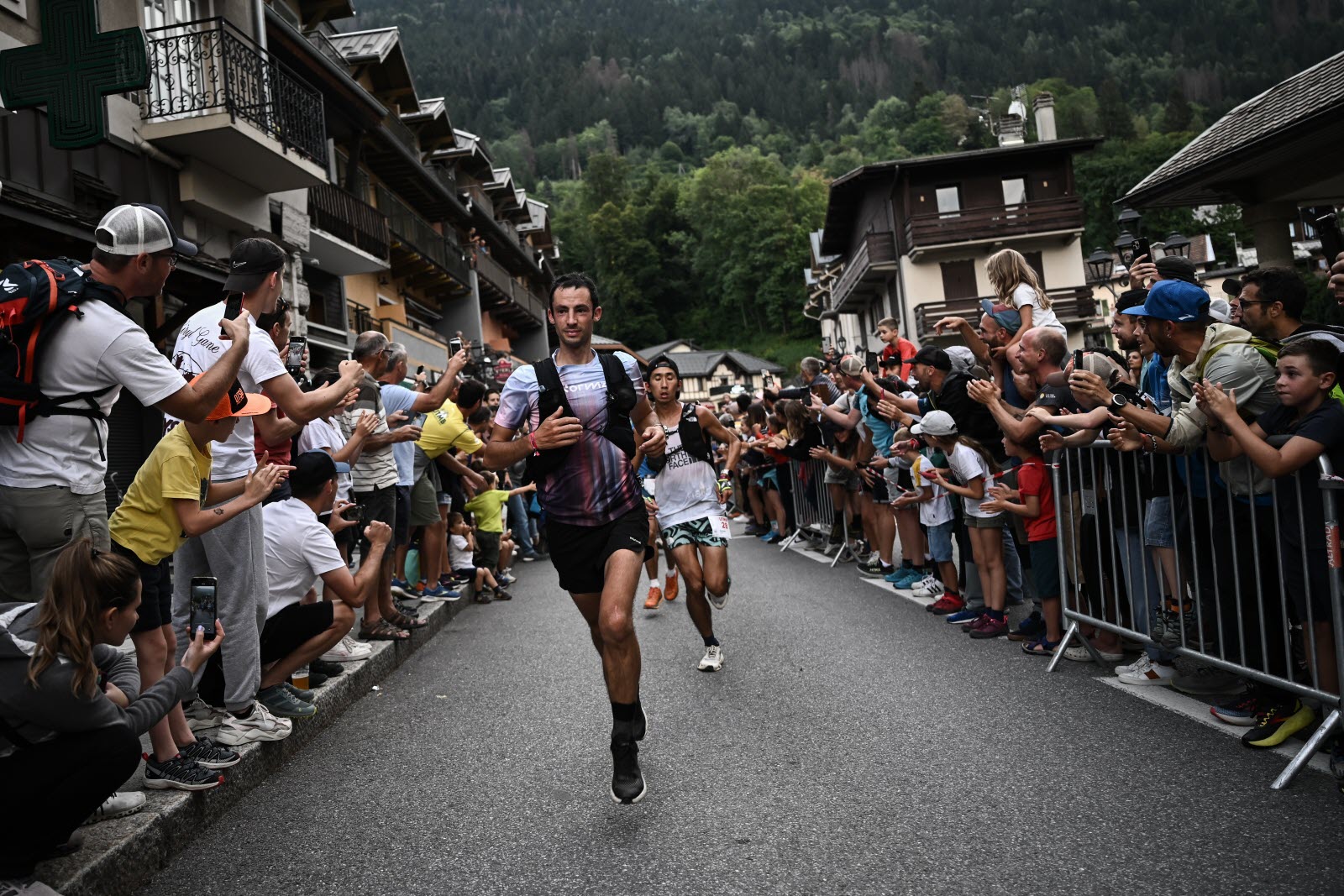


Article by RT Ross - Runner's Tribe (c) 2026
Kilian Jornet is not just one of the best trail runners of all time. He’s the most scientifically transparent elite endurance athlete on the planet. While most pros guard their training like state secrets, Jornet publishes detailed breakdowns of his methodology, his intensity distribution, his fueling strategies, and even his failures. He’s turned his own body into a public research project. And somehow, at 37, with three kids and a running shoe company to run, he’s still getting faster.
So what does it take to train like the greatest mountain runner who ever lived? Let’s break it down.

The Volume: 1000+ Hours Per Year, Every Year Since 2009
Kilian has been logging 1000+ hours of training annually for over 15 years. His weekly average hovers around 20 hours, split between running, ski mountaineering, cycling, and other mountain sports. Some winter weeks push to 30 to 35 hours when he’s deep in skimo season.
His training follows a seasonal rhythm. Winter is dominated by massive ski mountaineering blocks in Norway, accumulating 20,000+ meters of vertical per week. Spring transitions to running. Summer is race season. Fall is for mountain projects and recovery.
The consistency is staggering. In his own words: “There’s no such thing as the magical session that will make you better or a training program that will work for everyone. But the adaptations come from the repetition of training stimulus (consistency) and the individualization of those stimuli.”
A chart on his blog shows his weekly training hours since April 2009. The data speaks for itself: steady, relentless accumulation of volume across more than a decade.
The Intensity Distribution: 58% Zone 1
Here’s where Kilian’s approach diverges from what most amateur runners assume elite training looks like.
His breakdown using a 5 zone model:
Zone 1: 58% Zone 2: 19% Zone 3: 16% Zone 4: 4% Zone 5: 3%
That’s 77% of all training in Zones 1 and 2. Easy. Conversational. Recovery enabling.
The 16% in Zone 3 and 4% in Zone 4 represents substantial threshold work, similar to approaches used by Norwegian distance runners and triathletes. The minimal Zone 5 work shows he still develops top end speed, but with far less emphasis than most recreational runners assume is necessary.
His philosophy shifted around 2018 and 2019, coinciding with the birth of his first child. Instead of long unstructured days in the mountains at moderate intensity, he moved toward a more polarized model: lots of genuinely easy volume, then focused high intensity sessions with clear purpose.

The Physiology: VO2max of 89.5 to 92 ml/kg/min
Let’s be clear about the genetic foundation here. Kilian’s tested VO2max has ranged between 89.5 and 92 ml/kg/min across different assessments. For context, a healthy adult male averages 35 to 45. Amateur marathon runners hit 50 to 55. Professional marathoners reach 60 to 75. Anything above 80 is exceedingly rare.
His 2012 lab test results, published openly:
Max incline: 12km/h at 24% grade Oxygen saturation: 94% VO2max: 90 ml/kg/min Max heart rate: 199 bpm Lactate at 5 minutes: 13 mM/L Anaerobic threshold: 95% of max HR Recovery 1 min: 110 bpm Recovery 3 min: 85 bpm
That anaerobic threshold at 95% of max heart rate is absurd. Most athletes hit threshold around 80 to 85%. Kilian can operate at intensities that would blow up normal humans.
His physical stats: 171cm tall, 58kg, 8.7% body fat, 46% muscle mass. A power to weight ratio built for vertical.
The Typical Week (Specific Preparation Phase)
During his 2024 preparation for Zegama and Sierre Zinal, Kilian’s specific training weeks looked like this:
Monday: Long easy (40km) Tuesday: 20 minute uphill at 30% grade at threshold pace, followed by 20km easy flat running Wednesday: Long easy (30km or mountain) Thursday: Long easy (30km or mountain) Friday: Threshold long (2×15 to 16 minute uphill at 10 to 15% at threshold pace) Saturday: 1 hour easy Sunday: 10x400m flat at threshold (often fasted)
Total weekly volume: 20 to 25 hours, 8,000 to 12,000 meters of elevation, 140 to 220km of running depending on the phase.
He kept the mechanical stress low by limiting flat speed work to one session per week. He knows his body. He knows where injuries come from. The 10x400m session was done fasted to add glycogen metabolism stimulus without additional volume.

The Key Sessions
Kilian’s threshold work is built around repeatable test efforts on familiar terrain. His standard uphill is Nesaksla, a 2km climb with 700m of vertical gain near his home in Norway. He’s run it hundreds of times.
By running the same climb weekly for years, he removes variables. Weather, terrain, and course difficulty are constant. The only variable is his fitness. This allows him to track genuine performance improvement over time, separate from race day chaos.
His data shows he’s dropped his Nesaksla time by 7.3% over three years. At 37. With three kids. While running a shoe company.
Other key session structures:
General Preparation (Winter): Long skimo days at Z2 with big elevation Minimum 40 to 70km running per week on treadmill Progressive runs or intensity variations on weekends to touch Z4 and Z5 Weekly average: 30 hours, 20,000m vertical
Specific Preparation (Pre Race): 140 to 220km running per week 2 uphill threshold sessions 1 flat threshold session (10x400m) Heat training via sauna and indoor bike Race simulations every 4 weeks
The Cross Training: Ski Mountaineering as Base Building
Kilian’s winter training is dominated by ski mountaineering, not running. This isn’t accidental.
Skimo allows him to accumulate massive vertical gain and aerobic volume with minimal impact on his legs and joints. It develops leg strength, cardiovascular capacity, and altitude tolerance while preserving his body for the running specific phases.
His 2023/2024 winter included 30+ hour weeks of skimo, building to a third place team finish at the Pierre Menta, a brutal four day ski mountaineering race in the French Alps.
The cycling serves similar purposes. Long bike rides on recovery days build cardiovascular fitness without pounding. Heat training on the bike, wearing warm clothes indoors, helps him prepare for hot races while living in Norway’s cool climate.

The Evolution: Training Smarter at 37
In 2010 and 2011, young Kilian won Western States and dozens of other races by simply spending endless hours in the mountains. No structure. No periodization. Just volume and talent.
That approach doesn’t work at 37 with three children, a business to run, and a body that recovers slower than it used to.
His 2025 return to Western States required a completely different methodology. He prepared with:
Heat acclimation protocols done multiple times per week for months, despite living in 5 degree Celsius Norway Sodium absorption training to optimize hydration in desert conditions Altitude simulation sessions at 6000m equivalent in Font Romeu’s hypoxic chamber An 80km training run three weeks out, simulating race terrain, elevation, and fatigue Detailed monitoring via COROS of heart rate, effort pace, HRV, and recovery metrics
He managed a TFL injury throughout the build, swapping running for cycling when needed, adjusting daily based on pain levels. His third place finish at Western States 2025, running 14:19 (75 minutes faster than his 2011 winning time), validated the approach.
“I am a much better athlete and I am performing much better, but I need to train smarter. With the kids there’s less time to train and a much more marked routine, it is mostly logistics.”
The Lifestyle: Circadian Rhythms, Stress Management, Family
Kilian treats lifestyle factors with the same seriousness as training sessions.
Circadian rhythms: He limits travel to 2 to 3 international trips per year. He builds his “training camp” at home to avoid the disruption of changing time zones, food, and routines.
Stress management: He says no to most opportunities that would disturb his training and family time. His team filters requests to small windows that don’t conflict with sessions or time with his daughters.
Nutrition: He uses doubly labeled water tests to measure actual caloric expenditure. He tracks macros and total calories, adjusting food quality and quantity based on training phase. Anti inflammatory foods during high stress blocks. Specific bacteria targeting for microbiome health. Different diets for different sessions within the same week.
Family: Training sessions are squeezed into weekday hours when his daughters are at kindergarten. Weekends are for family excursions and short morning sessions only.
“Today, being a dad and spending time with our daughters (you’re never ‘resting’ but always walking around, running after, carrying) would seem that in terms of pure training programming isn’t perfect but in my experience it’s just to be aware of that when making small changes in the training loads.”
The One Percenters
Beyond the big picture, Kilian obsesses over marginal gains:
Heat training: Sauna sessions and bike work in warm clothes, multiple times per week Altitude simulation: Hypoxic chamber sessions at simulated 6000m to stress the system without mechanical load Nutrition periodization: Different foods for different training days based on session demands Sleep optimization: Consistent bed and wake times, minimal travel disruption HRV monitoring: Daily readiness checks to guide training intensity Weight manipulation: 58kg during aerobic base phases, dropping 2 to 4kg for race periods
The Verdict
At 37, Kilian Jornet has evolved from a talented kid who could simply outwork everyone into a methodical scientist who happens to have world class genetics. He publishes his training not because he thinks others can replicate it, but because he believes in the principles underlying it.
Consistency over years matters more than any single session. Most training should be genuinely easy. Intensity work should be focused and purposeful. Cross training preserves longevity. Lifestyle factors aren’t optional extras, they’re foundational.
He’s not slowing down. He won Zegama for the 11th time in 2024. Won Sierre Zinal for the 10th time with a course record. Completed 82 Alpine 4000m peaks in 19 days. Finished third at Western States 2025 in the most competitive field in the race’s history. Then summited 72 American fourteeners in 31 days.
The formula is simple. The execution is anything but.
Train a lot. Train easy most of the time. Train hard when it matters. Recover properly. Be consistent for decades. And never stop being curious about how to do it better.
Written from somewhere on a trail, probably behind schedule.
Sources below:
Here are the references for the Kilian Jornet article:
Primary Sources (Kilian Jornet’s Own Writing)
- Jornet, K. (2024). “Trail Running Training 2024.” Mountain Athlete Blog. https://mtnath.com/training2024/
- Jornet, K. (2023). “Training for long and short trail running.” Mountain Athlete Blog. https://mtnath.com/training2022/
- Jornet, K. (2025). “Training for Western States 2025.” Mountain Athlete Blog. https://mtnath.com/wsertraining/
- Jornet, K. “How do I train, again and again.” Kilian Jornet Official Website. https://www.kilianjornet.cat/en/media/train
- Jornet, K. “Training.” Kilian Jornet Official Website. https://www.kilianjornet.cat/en/training
Scientific Literature
- Álvarez Herms, J., & Jornet, K. (2024). “Physiological Data of Kilian Jornet During the Victory of UTMB 2022: An Exceptional Report of Maximal Metabolical Limits.” Sports Medicine, 54, 3211–3214. https://doi.org/10.1007/s40279-024-02091-4
Analysis and Reporting
- Roche, D. (2022). “Eight Takeaways From Kilian Jornet’s 2022 Training Data.” Trail Runner Magazine. https://www.trailrunnermag.com/training/trail-tips-training/kilian-jornet-training-data/
- Roche, D. (2021). “What You Need to Know About VO2 Max.” Trail Runner Magazine. https://trailrunnermag.com/training/trail-tips/what-is-vo2-max.html
- COROS. (2025). “Inside Kilian Jornet’s Training Data.” COROS Stories. https://coros.com/stories/more-than-splits/c/kilian-jornet-training
- COROS. (2025). “Kilian Jornet Returns to Western States.” COROS Stories. https://coros.com/stories/athlete-stories/c/kilian-jornet-returns-to-western-states
- COROS. (2022). “Analyzing Kilian Jornet’s Data to Help You Improve!” COROS Stories. https://coroscom.wpcomstaging.com/kilian-jornet/
- Outside Online. (2025). “Inside the Kilian Jornet Playbook For Western States.” https://run.outsideonline.com/trail/kilian-jornet-western-states-100-playbook
- Julbo. (2026). “How Kilian Jornet Trains: The Secrets of a Trail Running Legend.” https://www.julbo.com/en_wo/article/kilian-jornet-entrainement
- Julbo. (2025). “Kilian Jornet’s Western States 2025: Analysis of a Legendary Return.” https://www.julbo.com/en_wo/article/kilian-jornet-western
Interviews
- iRunFar. (2025). “Kilian Jornet Pre 2025 Western States 100 Interview.” https://www.irunfar.com/kilian-jornet-pre-2025-western-states-100-interview
- iRunFar. (2025). “Kilian Jornet Post 2025 Western States 100 Interview.” https://www.irunfar.com/kilian-jornet-post-2025-western-states-100-interview
- Canadian Running Magazine. (2025). “Will Kilian Jornet be crowned king of Western States 100?” https://runningmagazine.ca/trail-running/will-kilian-jornet-be-crowned-king-of-western-states-100/
- RUN247. (2025). “Knee pain and going from five degrees to 40: Kilian Jornet on the challenges ahead of Western States.” https://run247.com/running-news/trail/kilian-jornet-managing-knee-pain-western-states-2025-preparation
Historical Data
- Corless, I. (2013). “Kilian’s Test Results.” Ian Corless Blog. https://iancorless.org/2013/01/29/kilians-test-results/
- Some Work, All Play Podcast. (2024). “Episode 219: Kilian Jornet’s Training, New Double Threshold Workout Study.” Spotify. https://creators.spotify.com/pod/profile/someworkallplay/episodes/219
Key Data Points Sourced
| Data Point | Source |
|---|---|
| VO2max 89.5 to 92 ml/kg/min | Trail Runner Magazine, Ian Corless, Julbo |
| 1000+ hours training annually since 2009 | Trail Runner Magazine (Roche analysis of Jornet blog) |
| 58% Zone 1 intensity distribution | Jornet blog via Trail Runner Magazine |
| Weekly volume 20 to 30 hours | Jornet blog (mtnath.com) |
| Physical stats (171cm, 58kg, 8.7% body fat) | Julbo, Oreate AI compilation |
| Lab test results (2012) | Ian Corless |
| 2024 training specifics | mtnath.com/training2024 |
| Western States 2025 preparation | mtnath.com/wsertraining, COROS, iRunFar interviews |
| 7.3% improvement on Nesaksla climb | mtnath.com/training2024 |
All training session structures, intensity distributions, and philosophical quotes are sourced directly from Kilian Jornet’s own published writing on mtnath.com or from verified interviews.