



There’s been no bring-back-the-mile style campaign, but the 3000 metres is well and truly back.
So what, you say. Like the mile (perhaps even more so), the 3000 has never really been away. It’s been substituted in for the 5000 metres in Diamond League meetings – even the final, even the final in Eugene 2023, for heaven’s sake.
And it’s the ‘long-distance’ at the world indoor championships, has been in fact for the entire history of the undercover event. Portugal’s Joao Campos and Canada’s Debbie Scott-Bowker were the champions at the 1985 World Indoor Games, which would be the $64-dollar question at any pub trivia quiz night.
Even further back, the 3000 was one of those odd distances attempted by pretty much every champion distance runner at some time or another. Ron Clarke and Kip Keino held the men’s world record back in the 60s, Brendan Foster and Henry Rono in the 70s; Grete Waitz was one of the early women’s world record holders. Distance running royalty all.
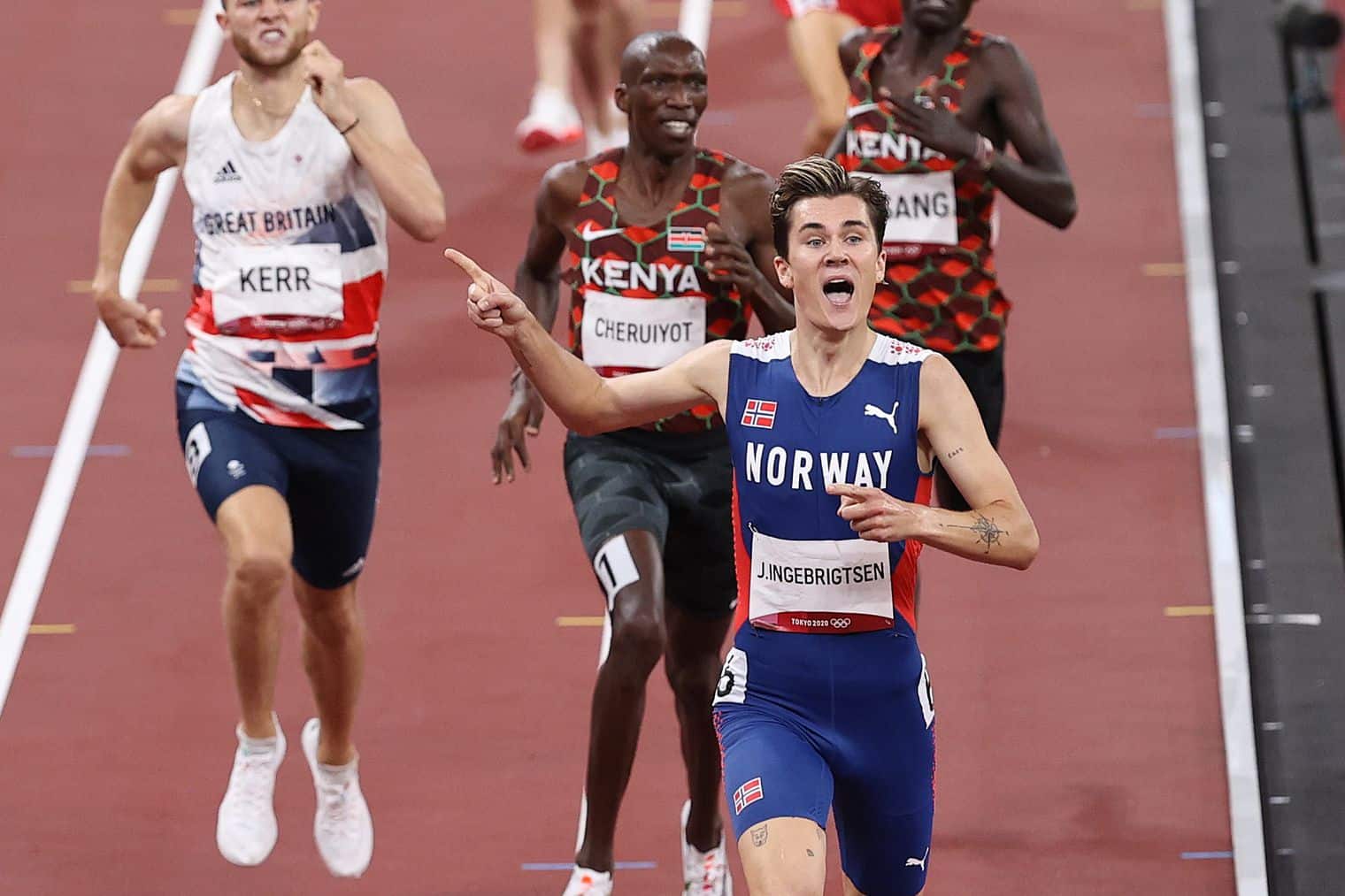
We wondered as Daniel Komen took the men’s world record down to 7:20.67 (under 59 seconds per lap average) back in 1996 and were astounded when Jakob Ingebrigtsen took that down to 7:17.55 just two years ago. We marvelled in a different way when Ma’s Army member Wang Junxia ran the current women’s world record 8:06.11 in 1993, a time which continues to defy all, even Faith Kipyegon who ran 8:07.04 last year.
So, yes, just like the mile, the 3000 metres has never gone away. It’s raced more frequently and most athletics fans are aware of its significance and of what constitutes a world-class performance.
Ron Clarke may have long lost the world record, but the 3000 was front of mind most recently when the Australian championships were run at the revived Hobart Track Classic. Claudia Hollingsworth beat a stellar field in winning the women’s title, Callum Davies reminded us of his ability and his tactical ‘nous’ in taking the men’s.
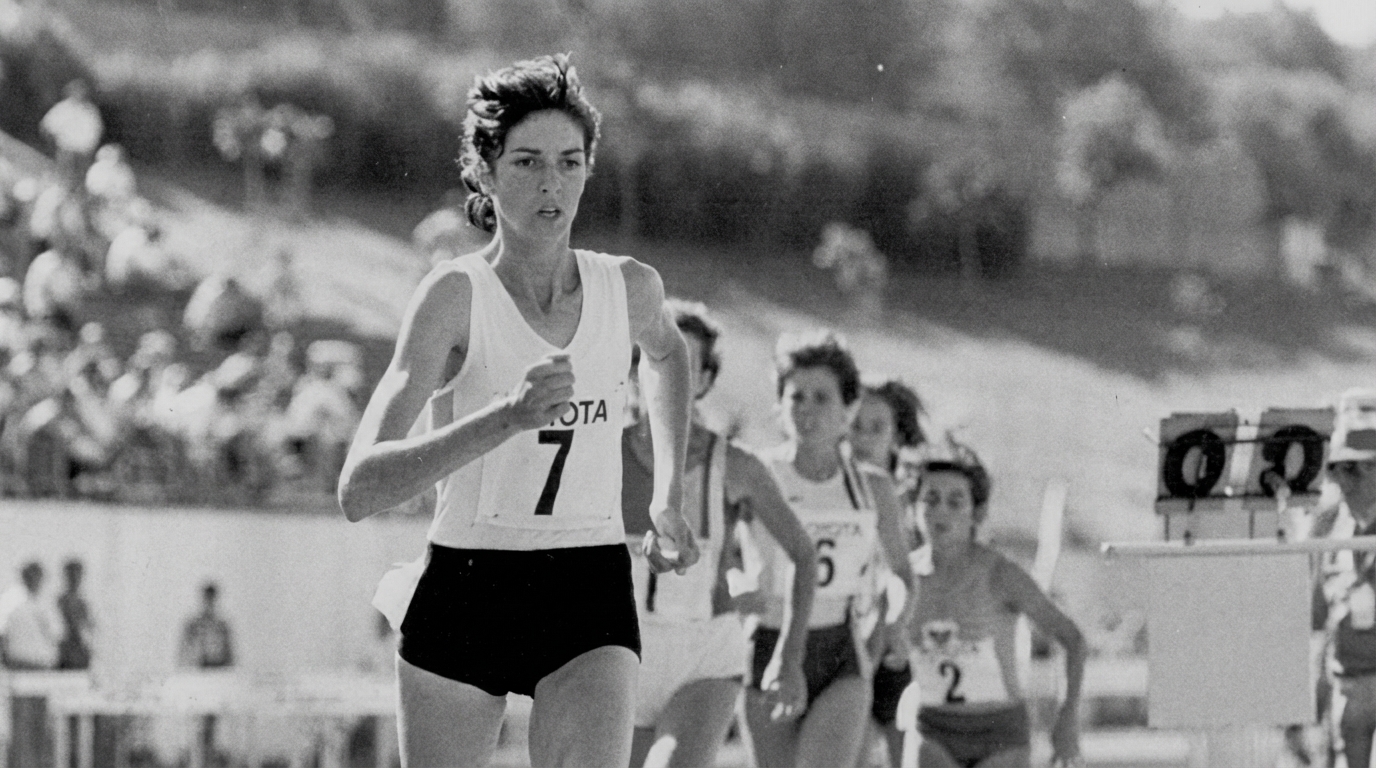
If the 3000 metres has not dropped off the radar, however, not all elements of the event’s history are remembered equally. However much we rusted-on distance fans might gnash our teeth as the seven-and a-half laps replaces the 12-and-a-half in yet another DL, it’s not the same as ignoring a large chunk of history. I would argue that is exactly what we have done about the period from the mid-1970s to the 1995 world championships during which the 3000 metres was the championship distance for women. Until 1987, indeed, the only track championship distance for women.
When the men who ran world and Olympic athletics begrudgingly conceded women could also run marathons and the classic road distance was opened up to women at the 1982 European championships, the inaugural 1983 world championships and, finally, the 1984 Los Angeles Olympic Games, they somehow baulked at making the logical change to equality of track distance events concurrently.
Granted, bringing in all three distance events at once may have been difficult, but compounding any such difficulty the ‘wise’ heads decided the women’s track distance would be the 3000 metres. Even when the 10,000 metres came in the next Olympic cycle – 1987 in Rome and 1988 in Seoul – it would not be until Gothenburg in 1995 and Atlanta in 1996 that the 5000 metres replaced the 3000.
Amidst all that dithering, the history of those interim years was not only diminished but also somewhat lost. Which is a pity, because there were many great moments. Let’s recall some of them and the Australian women who played a part.
First, let’s not forget that this slower than necessary adoption of the full range of distances cost many women their best chance at making Olympic teams. Australian women went to the world cross country in 1975 (and its forerunner, the ICCU championships, in 1970). That was the generation of Angie Cook, Lynne Williams, Gayelene Clews, Anne Lord, Rhonda Mallinder and many others. Some got their chances later as the longer distances were adopted, but until the 1978 Commonwealth Games the longest distance available to women was the 1500.
There was some great championship racing at 3000 metres. The very first Olympic race at the distance was a cracker. Mary Decker Slaney had won the 1500/3000 double at Helsinki the year before. Teenage sensation Zola Budd – South African born – had taken up her right to an English passport just before the LA Games. They clashed – literally – in the Olympic final, coming down in a tangle of legs as Decker Slaney tried to push through on the inside of Budd.

Decker Slaney could not continue, Budd ran on to ill-informed booing from some of the crowd, but never regained her composure as Maricica Puica of Romania raced to the first Olympic women’s 3000 gold medal. Though Budd won the next two world cross-countries, this turned out to be her best and only shot at an Olympic gold medal.
World Athletics, then known as the IAAF, had staged a world event for the 3000 and another new women’s event, the 400 hurdles, in 1980. Australia didn’t send a representative to the 3000 but had sent Angie Cook to the 1977 World Cup (she finished fifth) and then she won selection to the following year’s Edmonton Commonwealth Games (sixth). From then until LA, the only representative in the 3000 was Megan Sloane in Brisbane in 1982.
Stepping up at those LA Olympics was South Australian teenager Donna Gould. She didn’t make the final but had set an U20 junior record of 8:44.1 in a mixed race in pre-Olympic competition. Gould went on to represent Australia in road cycling at the Seoul 1988 Games.
Topping out that 1980s era was the performance of Krishna Stanton in finishing fourth in the 3000 at the 1987 world indoors in Indianapolis. Stanton was less than 0.5 seconds behind bronze medallist (and LA Olympic champion) Puica in a race won by Soviet athlete Tatyana Samolenko from her teammate Olga Bondarenko.
Excluding Gould’s mixed-race time, Stanton’s 8:48.38 was the fastest by an Australian until Benita Willis ran 8:42.75 – again at a world indoor championships – in 2001. Other notable 3000 performers in that era included Susie Power, Carolyn Schuwalow and Sharon Dalton.

In more recent times, with more frequent opportunities, the national all-time list has been substantially revised with eight of the top 10 performers doing their best time since the beginning of 2024. Georgia Griffith, Jess Hull and Linden Hall lead the way as the only three Australian women under 8:30. Going by her win in Hobart, Claudia Hollingsworth will be joining them, perhaps as soon as her next race.
That’s all happening right under our noses. But we shouldn’t forget the pioneers, nor the ones who didn’t get the chance when the 3000 was the longest distance women could run on the track.