

.)

A Column By Len Johnson
Years ago, there were many sets of numbers I had committed to memory.
The world all-time list of sub-2:10 marathoners, for example. The top 20 Australians (it helped that my own modest 2:19:32 was on that list!).
It also helped that the weren’t that many numbers to remember. Few men had broken 2:10 once, let along on multiple occasions. And as for the modern marathon phenomenon of the first 10 or more running super-fast times – well, that just didn’t happen. When Derek Clayton ran 2:09:36 to set his first world best in Fukuoka in 1966, he won by almost two full minutes. Now, there would be half-a-dozen others within that same time band.
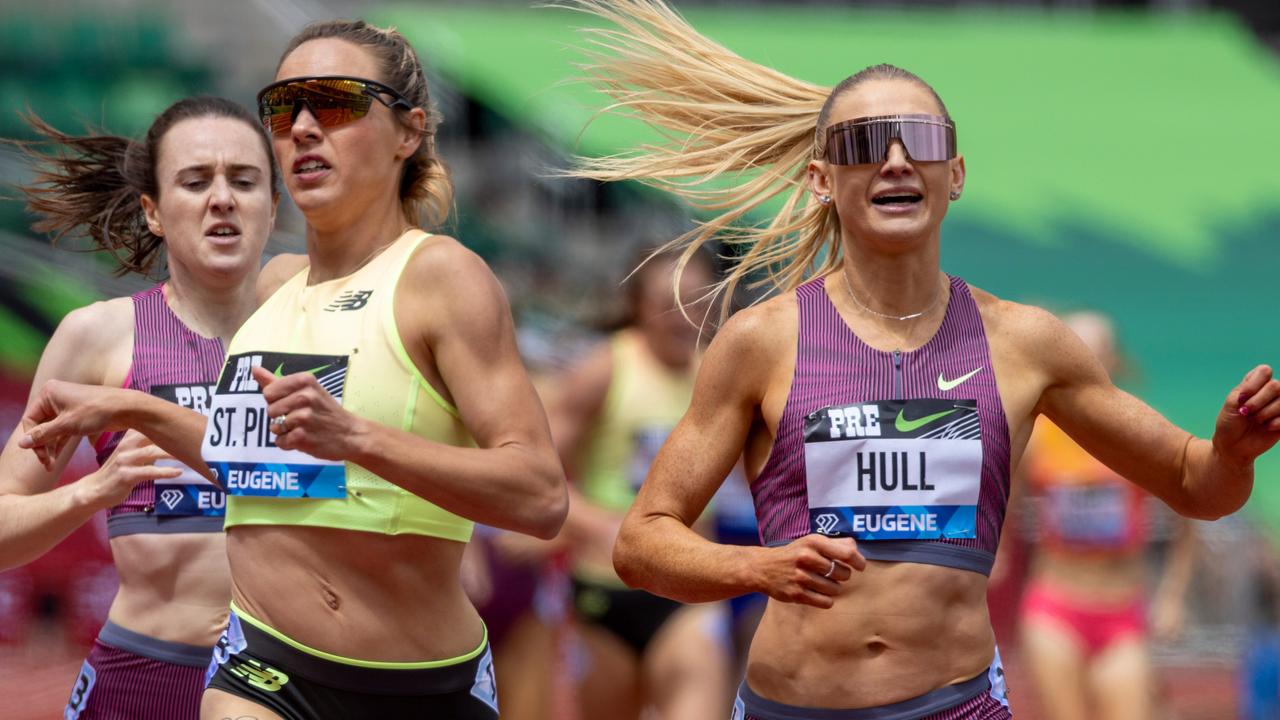
Same thing with the women’s 800. Recently I wrote that the event was defined by a pair of fine bookends – Rome 1960 silver medallist Brenda Jones and Tokyo 2025 finalist Jess Hull. The same was true of sub-2 minute performers. Charlene Rendina was the first Australian sub-2 with what would be a long-standing national record 1:59.0h in 1976.
Rendina’s Montreal Olympic teammate Judy Pollock joined her on the sub-2 list at the Games later the same year but it would be another 20 years before Margaret Crowley joined them as the third Aussie sub-2 performer. By the end of the Sydney 2000 Olympic year, Tamsyn Manou had run 1:59.21 and also become the most prolific to that point with seven sub-2s. Crowley by then had two of the total 11, Rendina and Pollock one each.
At the end of 2019, the year in which Catriona Bisset finally bettered Rendina’s record with a 1:58.78, there were still only six on the all-time sub-two minute list – Rendina, Pollock, Crowley, Manou, Madeleine Pape and Bisset.
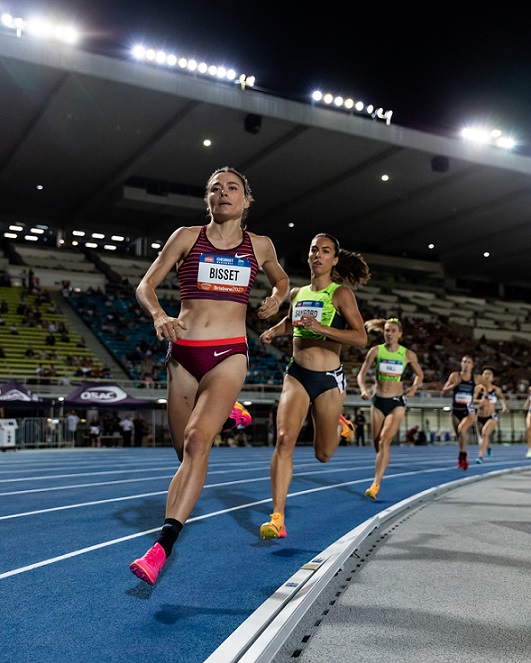
Since then, an explosion. There has been a 250 percent increase in the number of women to have achieved the mark – from six to 15. The number of performances has risen at an even greater rate from 24 at the end of 2019 to 107 at Christmas 2025. That’s almost 450 percent.
As former treasurer Paul Keating said of the figures underpinning one his federal budgets, “this is a beautiful set of numbers.” There has also been a significant pick-up in men’s 800, too, with Alex Rowe equalling Ralph Doubell’s Olympic gold winning national record 1:44.40 before Joe Deng, Peter Bol, Peyton Craig, Deng and Bol broke it again. There has also been build-up behind the contemporary record-breakers but not to the same extent as with Australian women.
Since Bisset overturned Rendina at the top, she, Claudia Hollingsworth and Hull have all improved the national record, topped by Hull’s 1:57.15 in the semi-finals at Tokyo25. Over the same period of time, Linden Hall, Sarah Billings, Caldwell, Bendere Oboya Hollingsworth, Georgia Griffith, Carley Thomas, Tess Kirsopp-Cole have all joined the sub-2 list.
Numbers on that all-time list of sub-two-minute performers have increased year on year since 2021; by one in each of 2022 and 2023, and by three in each of 2024 and 2025. To think it took 20 years to emulate Rendina and Pollock and now six more in two years.
The surge in numbers has been accompanied by a churn at the top. In January this year (2025), Catriona Bisset held the Australian record at 1:57.78. As I write in December (and I think there’s no further 800 action coming in the remaining few days of the month), Hull, Hollingsworth and Caldwell had all run faster and Sarah Billings had come within five hundredths of a second.
Caldwell won the national title from Hollingsworth, making her decisive move in the back-straight as her main rival was caught in a box on the inside. Both were in the initial batch of selections for Tokyo.
Billings ran the 1500 in Perth, finishing second to Hull, but a couple of weeks later she produced her near-miss at Bisset’s record at the Diamond League meeting in Shanghai. Hull had already shown she was a serious contender in the two-lapper with a personal best 1:58.58 as the ill-fated Grand Slam Track series got under way in Kingston, Jamaica.
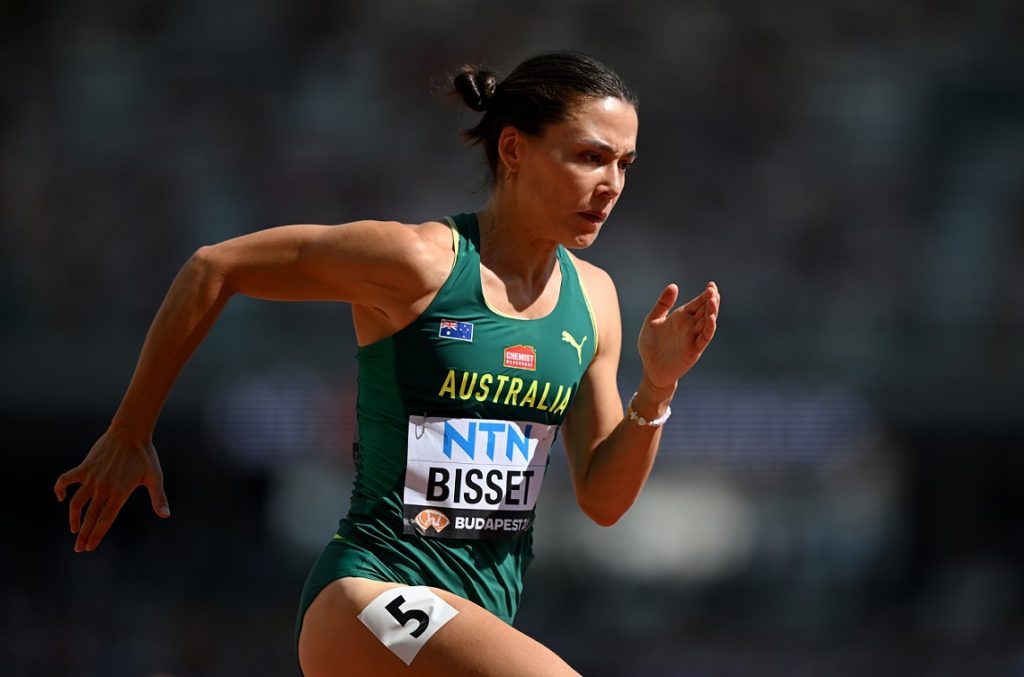
Then, at the Chorzow Diamond League in Poland in August, Hollingsworth finished fifth in a new national record 1:57.67, just three hundredths ahead of Caldwell’s 1:57.70. The race was won by Keely Hodgkinson, racing for the first time in almost a year, in 1:54.74 with eventual world champion Lilian Odira second in 1:56.52. That put the Australian pair’s results into perspective, but if there’s been another occasion in which two broke the previous national women’s 800 record in the same race I can’t recall it.
Come Tokyo, however, Hull had the last word. After being pulled down in her heat and advanced to the semis on appeal, she ran a national record 1:57.15 to make the final. Hull ran 1:57.30 in the final, making it four performances under Bisset’s previous record in just short of five weeks.
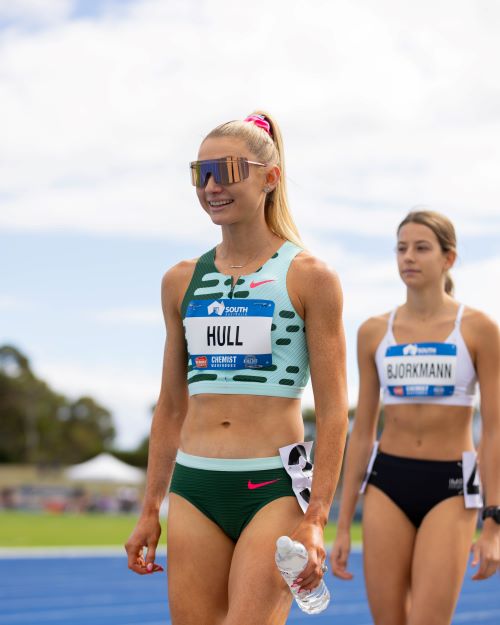
That’s some revision of the all-time list. Similar progress has occurred in both men’s and women’s 800/1500 but it’s the women’s 800 that stands out for me.
If Paul Keating had been an athletics statistician rather than a federal treasurer, he may well have characterized it “a beautiful set of numbers.” But he has not (as far as I know), so I will.