



It was beginning to look a lot like Christmas. Black Friday sales – the shopping confection which serves as the sprint race to the Christmas F1 Grand Prix – out of the way, things winding down.
Of course, there’s always a bit of athletics to December. But this week, suddenly athletics, like Christmas, was ‘in the air’. The world cross-country championships trial races – forced forward by the January 2026 timing of the championships – kicked things off in Canberra.
But wait, as they say, there’s more. As a large crowd split roughly 50-50 between humans and kangaroos, watched the country’s distance battle for spots in the team for Tallahassee, things were happening elsewhere, too.
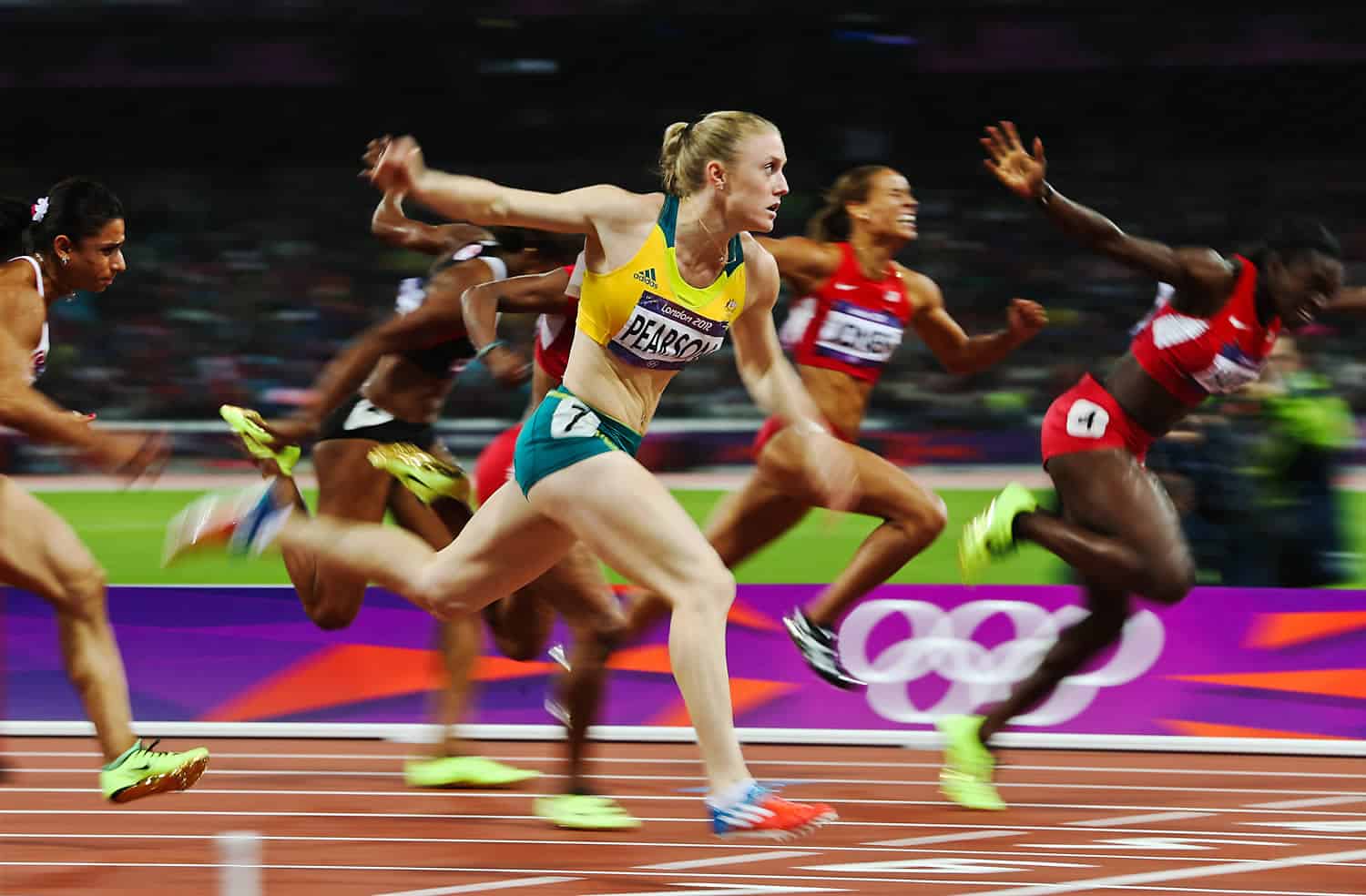
Australia is usually an observer only as the World Athletics Awards play out each year in Monaco, picking up the odd award in the odd category but just one gong in an athlete category – Sally Pearson in 2011 (admittedly, that was as Athlete of the Year). This year, that number became two, as Nicola Olyslagers was named as female Athlete of the Year in field events.
And two-and-a-half if you consider commenting as the next best thing to competing. Actually, on the criterion of longevity, commentary, journalism in general, has a far greater career span than the life of a competitor. Bruce McAvaney has longevity in spades.
In presenting the President’s Award to the veteran Australian broadcaster, World Athletics president Sebastian Coe observed of this peerless observer: “Bruce has been involved in international sport at the highest level, broadcasting to the widest possible audience over five decades.”
Coe also praised McAvaney for his “ability to recognise performance in a historical context.” In the context of Australian history at the World Athletics Awards, then, two recognitions in one night is as close to a ‘sweep’ as we’re ever likely to get.
One thing I’d note about Bruce is that you never come away from a conversation with him without feeling energised and enthused. Which is an appropriate segue to the next element of our sport’s big week – the gathering in Melbourne of the nation’s best school talent for the annual Australian Athletics All Schools Championships.
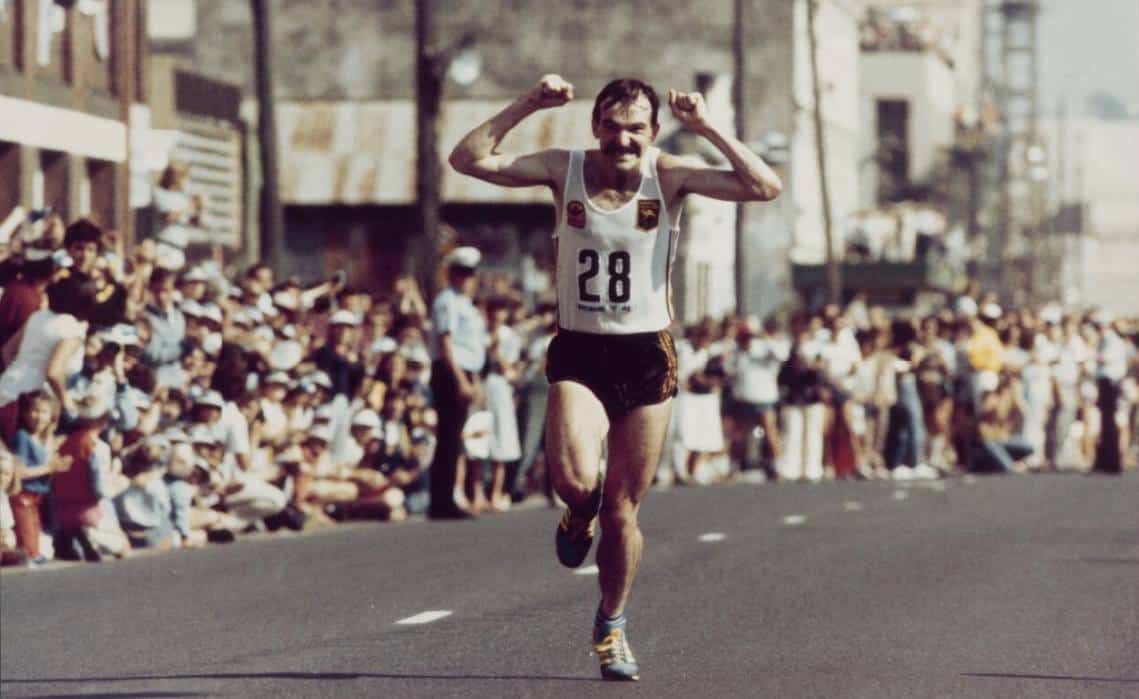
A week in which too much sport has been barely enough concludes with a couple of mega international marathons – Valencia and Fukuoka – on Sunday, 7 December. Fukuoka is such a significant marathon for historically for Australian men – world records for Derek Clayton and Rob de Castella, national records for Rod MacKinney (first Australian under 2:20) and Brett Robinson; Valencia is the marathon of choice now for fast times with national records for Andrew Buchanan and Sinead Diver.
Traditionalists, too, got their moment in the week with the announcement that World Athletics would not proceed with its proposal to use a take-off zone in the long jump, replacing the traditional take-off board. Not that you could be sure from a quick reading of the media statement, mind you which mentioned how WA had “identified a problem,” come up with a solution which “trialled well” and was, indeed, still working on ways to improve the event like “getting the officials to rake the pit quicker.”
And, of course, there was the overriding view of the athletes that they were not in favour. At least that doesn’t seem to be reading too much into the initial responses (as quoted in The Guardian) to the proposal of 2020 and 2024 Olympic champion Militiadis Tentoglou – “it’s dog-shit”; and event GOAT four-time Olympic champion Carl Lewis – “an April Fool’s joke”.
So that’s a ‘No,’ then?
Anyway, back to the award winners. In recent years World Athletics has split its AOY honours into three categories – track, field and out of stadia. Initially, this yielded six AOYs, three male, three female, so now they have overall male and female athletes of the year who shall be one of the three winners in the separate categories.
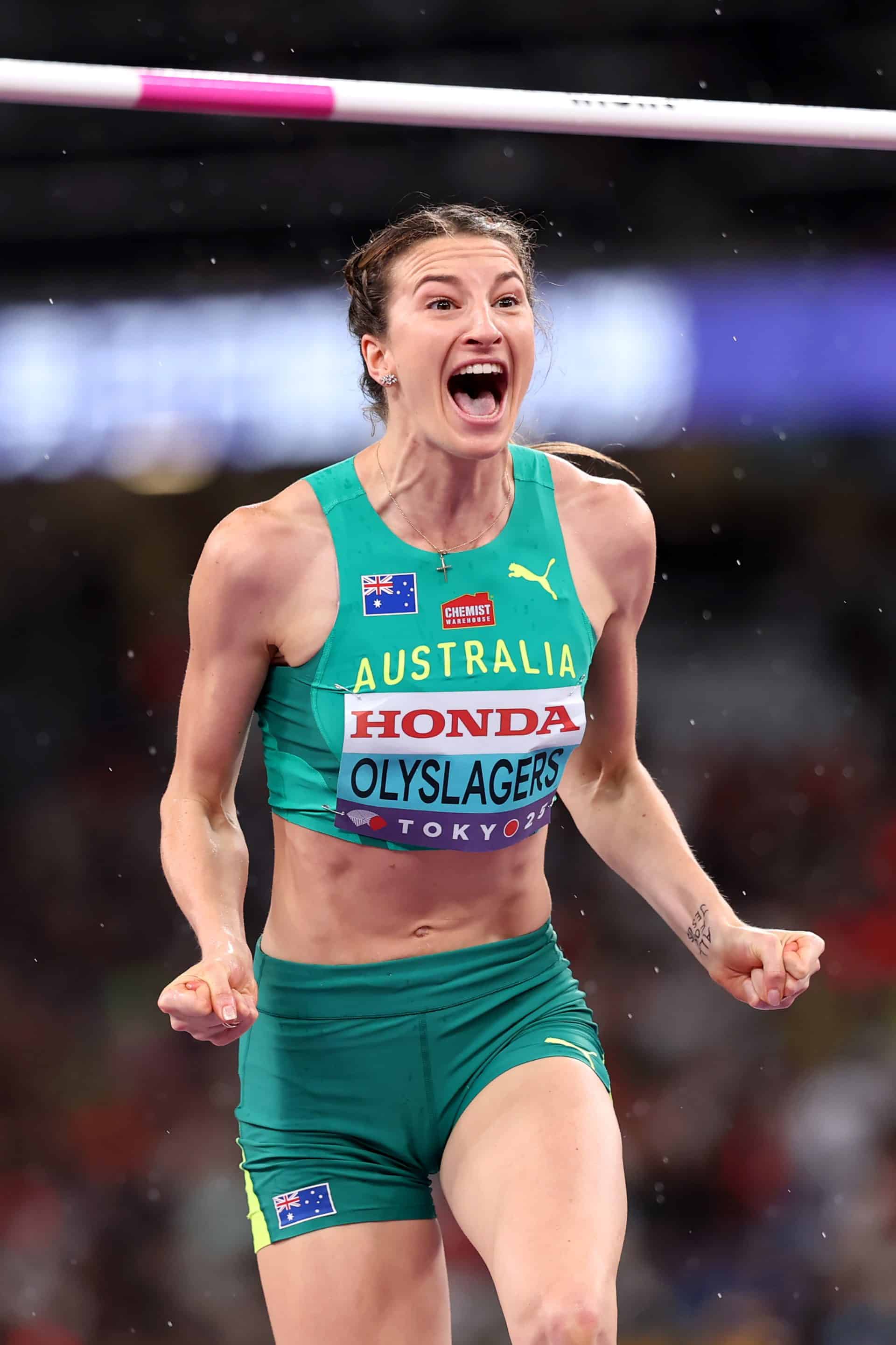
Nicola Olyslagers had no real challenger, in my view, for field AOY. She had a very good case for the overall award, too, taking the indoor and outdoor world titles as well as winning the Diamond League final in the high jump. In doing that, she defeated reigning Olympic and defending world champion Yaroslava Mahuchikh who last year broke the long-standing world record in clearing 2.10.
Trouble was, the nominee as female track AOY was Sydney McLaughlin-Levrone. Again, McLaughlin-Levrone had a minimalist season; again, though, it was of the highest quality, taking on the flat 400 and running the second-fastest time ever in defeating Olympic and defending world champion Marileidy Paulino.
That’s hard to beat. So, McLaughlin-Levrone is overall, and track, AOY. Dual gold medallist at the worlds, Spain’s supreme road walker Maria Perez, was the out of stadium nominee.
The men’s was likewise clear, so far peerless pole vaulter Mondo Duplantis field and overall AOY. Kenya’s 800 superstar Emmanuel Wanyonyi was track AOY and Kenyan marathoner Sabastian Sawe took the out of stadium award.
Now, a few further words about Bruce McAvaney. As noted already, you rarely come away from a conversation with Bruce without being energised (or re-energised) and enthused about something. We both hit the international road (and track, and field) at about the same time – me with the 1982 Commonwealth Games and 1983 worlds, Bruce with the 1984 Olympics.

Over the journey there have probably been more sombre days than joyful ones for Australia, so it’s an invaluable colleague who always finds something positive from the day’s events. It helped that both of us embraced the internationalism of the sport, taking (almost) as much joy from an outstanding performance by non-Australians as Australians
Over that time Bruce has worked with many colleagues from within the sport, among them Maurie Plant, Raelene Boyle, current Australian Athletics president Jane Flemming, Dave Culbert and Australian Athletics’ statistician Paul Jenes.
Bruce’s recognition from World Athletics and its president Sebastian Coe has been honourably earned and is thoroughly deserved. He has covered Australian Rules Football, the Australian Open tennis and the biggest events in Australian horse racing.
But it is on athletics that he bestows his favourite accolade – special.
“I’ve been incredibly fortunate to work across many major events and sports,” he said in accepting the award, “but nothing compares to athletics at the highest level.”