



Through the 2005 winter in Melbourne a group of middle-distance supporters coalesced around the idea of doing something to promote middle-distance running. Over several meetings the concept of a Victorian Milers Club was formulated.
Now, as I write this, Vic Milers is on the eve of meeting number 100.
It is fair to say few of the participants in those original discussions envisaged the growth over the next 20 years. Indeed, the minutes of a committee meeting held after the very first competition, at Melbourne’s Box Hill track on 27 October 2005, appeared under the sardonic heading: “Minutes of the post mortem meeting of the Victorian Milers Club Organising Committee.”
The minutes go on a little more optimistically to note that “the possibility of a further VMC meeting before the end of the year was examined.” One further meeting was indeed held in December, and a third meeting of the inaugural season on 16 March, 2006, this one attracting several runners in Melbourne for the Commonwealth Games (the men’s 800 was won by England’s Nick McCormick in 1:49.3).
Present at the post-meeting meeting were Daniel Quin, Trevor Vincent (president), Nicky Frey, Len Johnson, Tim Crosbie, Graeme McDonald, Peter Fortune, Bruce Scriven, Simon Lewin, Ian Sloane, Paul Jenes, Nick Honey, Jade Borella, and Joan Hines. Justin Rinaldi, an active member of the inaugural committee, was an apology.
The committee was a mix of coaches, officials, Athletics Victoria representatives and middle-distance supporters. It was, and remains, a hands-on operation.
The notional aim was to attract 100 competitors to the first meeting which, to keep things simple, offered only the 1500 metres distance. Seventy-six athletes ran, of whom 35 ran personal bests, including the men’s 1500 winner Louis Rowan who won the A race in 3:41.3 and then went on to record a Commonwealth Games qualifier 3:40.0 at the December 2005 meeting. Libby Allen defeated Lisa Weightman to win the women’s 1500 in 4:23.3.
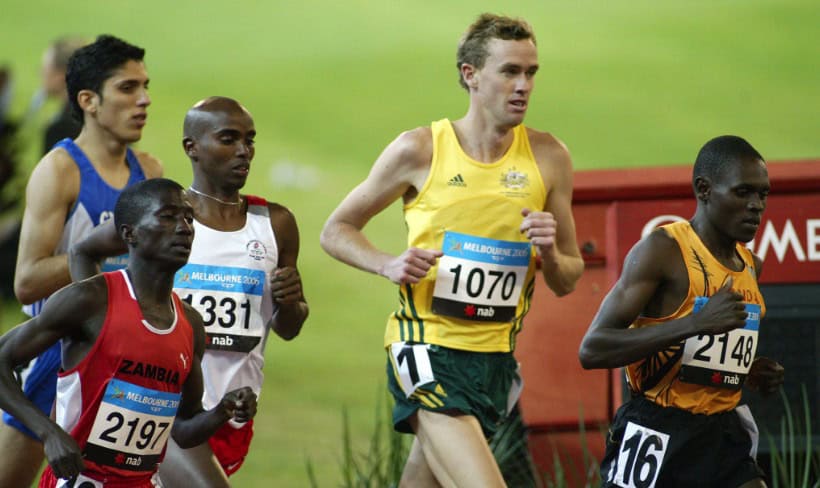
There was quite a lot of debate around meeting three, some of the committee feeling it would attract local and visiting Commonwealth athletes, others fearing it was too close to the Melbourne Track Classic and the Games.
The concept of a club to promote middle-distance running was not a new one. Most of the original committee members were familiar with the British Milers Club and its contribution to UK middle-distance strength. And, like many ideas around Australian distance running, Pat Clohessy was an active advocate of such a club in Australia.
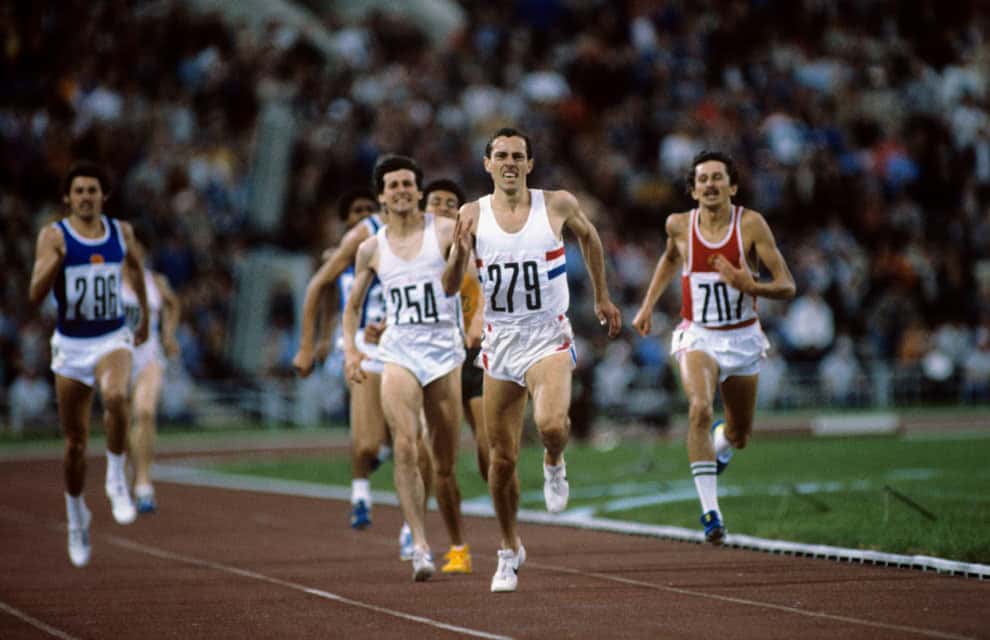
At the time ‘Clo’ was coaching at the University of Queensland and galvanised by the presence of Steve Ovett, who had just taken up residence in the ‘Sunshine State’, had organised several competitions under a Queensland Milers Club banner. The Vic Milers was the ‘second carbon’ of an original blueprint.
Participation aims were twofold: first, to provide good competition for elite runners; second, to offer all comers access to graded competition. Again, this was based on the British Milers Club model, but the Vic Milers growth was more rapid than anyone involved had envisaged. Meeting two attracted 110 competitors, meeting five in the 2008-09 season broke the 200 mark and 2015-16 produced the first over 300.
It thus took 10 years to get from 76 to 300-plus, but the very next season, 2016-17, saw four of the five meetings over 300 (high of 366) with the fifth meeting just under 300 at 297. The 2018-19 season saw a new peak at 433 with all five meetings in excess of 300.
As numbers continued to swell it became necessary to apply a cap if Milers Club was to continue to provide two distances for all comers. No-one saw that coming back in the winter of 2005.
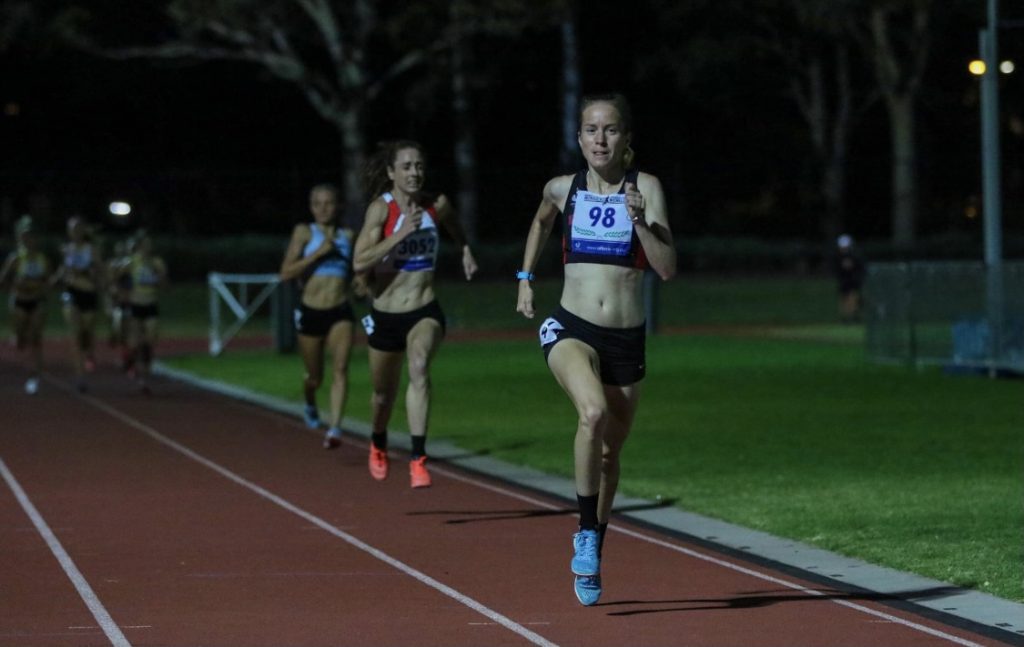
The quality of competition – especially on the women’s side – has been high from the start. Zoe Buckman, Tamsyn Manou, Kelly Hetherington, Madeleine Pape, Catriona Bisset, Georgia Griffith, Linden Hall, Lauren Ryan, Abbey Caldwell and Claudia Hollingsworth are just a few of the top female competitors to have lit up the women’s 800 and 1500 metres. The men’s side is not quite as strong, perhaps, but Peter Bol, Joseph Deng, Jeff Riseley, Luke Mathews, Ben Buckingham and Seth O’Donnell are among the top men to have competed. In 2023, 16-year-old Cameron Myers popped down from Canberra to win the A 1500 in 3:40.60, which remains the third-fastest run at Milers Club. He continues to impress!

If the next 100 meetings can match, much less build on, the first 100, the Victorian Milers Club will have more than fulfilled the aims of its first committee.
Disclaimer: Your correspondent was a founding committee member of Victorian Milers Club and remains a member. It has been a most rewarding experience.