



One bite at the annual rankings compiled by Track & Field News is never enough. As foreshadowed, then, here we are back for seconds.
Last time I wrote about the Australians who had been ranked in the top 10 in an individual event in 2025. There were 10 in all, back up to the level of two years’ earlier after a fall from 12 to 10 to eight.
Another measure I note in my own perusal of the rankings is how Australian athletes have fared over a period of years, not just in their own individual rankings, but how our best Australians have ranked over that period. I reckon it gives a picture of the depth of results.
The simplest measure is looking at the most recent year an Australian ranked in each event. Track & Field News ranks across 46 events, 23 men’s, 23 women’s. so, let’s look at how we’ve fared in the past five years and then since the Sydney 2000 Olympic year.
First off, in four of the 46 events no Australian has ever ranked in the top 10. The events are the men’s hammer throw and the women’s 5000 metres, triple jump and shot put.
Technically there are six events – no Aussie man or woman has ever ranked top 10 in the 35km road walk either. But seeing the 35km is just a short-lived distance as the walks switch from their traditional 20 and 50km to half-marathon and marathon it makes sense to smooth over this inconvenience and consider the 35 and the 50 as one event. Besides, what would a statistic be without an anomaly or two?
From 2021 until 2025, inclusive, at least one Australian male athlete ranked top 10 in 11 of the 23 events. Women did slightly better with13 of the 23. Stretch the period of the comparison out to cover 2000-2025 and women have only missed a top 10 position over four of the 23, compared to seven for men.
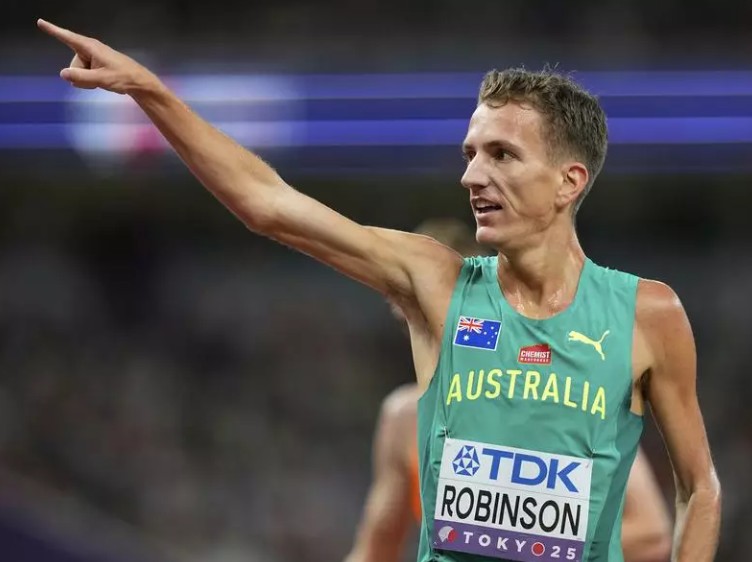
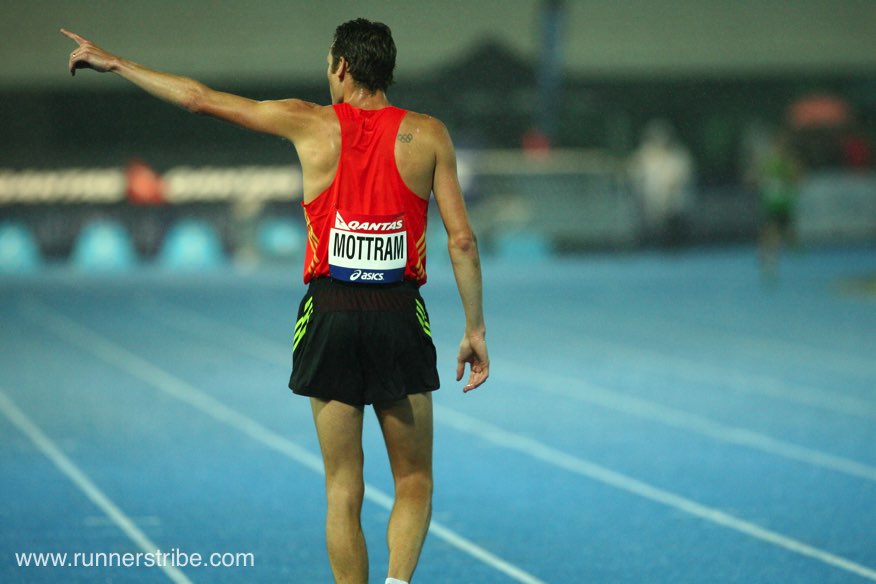
In covering the 2025 rankings, I pointed out that Ky Robinson had become our first top 10 in the men’s 5000 metres since Craig Mottram in 2005. Likewise, Liam Adcock in the long jump was the first since Henry Frayne in 2018. Besides the four/six events in which no Australian has ever ranked, what are some of the other interesting droughts and who are some of the other recent drought breakers.
Sprints, both male and female, have been barren ground for some time now. You go way back to 1967 and Gary Holdsworth to find the last Australian male 100 metres sprinter to rank top 10. It’s still a long – albeit almost three decades less – to Damien Marsh, the most recent to rank in the 200. By comparison, it seems just yesterday that John Steffensen was ranked in the 400 (it was actually 19 years ago in 2007).
Melinda Gainsford-Taylor, Cathy Freeman and Lauren Hewitt all ranked in the 200 top 10 in 2000, but otherwise it is a similar tale in women’s 100 and 200. Raelene Boyle is the most recent ranked in the 100 – 50 years ago in 1976. Freeman – should anyone need reminding – won gold in the 400 at Sydney 2000, but only Jana Pittman in 2003 has cracked the top 10 since.
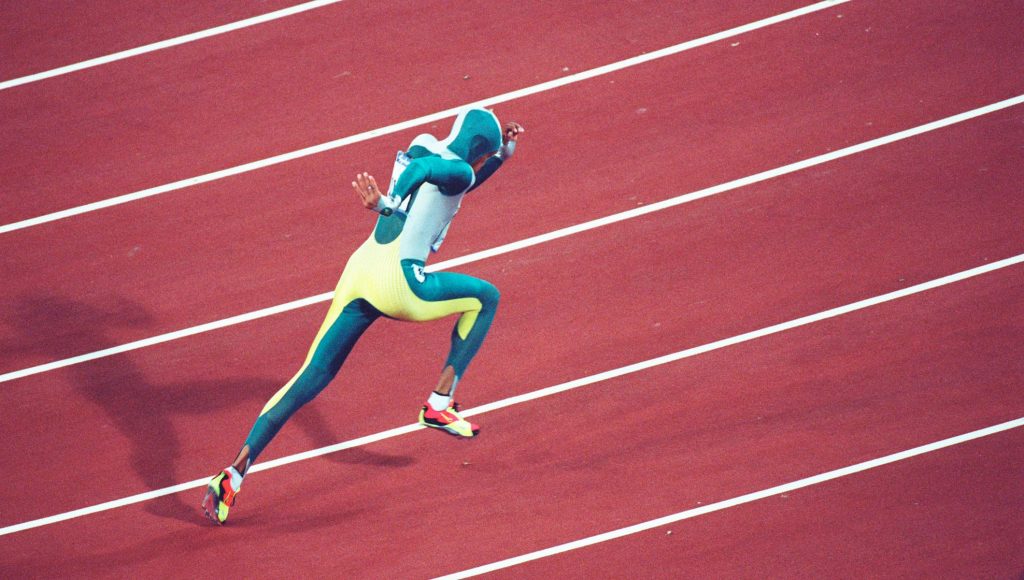
Strong performances by national relay squads and the emergence of exciting talents – including Gout Gout, Lachlan Kennedy and Torrie Lewis – suggests that our next top tenner can’t be too far away. Let’s hope so.
Middle-distance has been a success story of the recent era. Catriona Bisset was the one to finally break Charlene Rendina’s national 800 record and also to become the first Australian since Rendina to rank top 10. Now she has been supplanted as national record holder by Claudia Hollingsworth and others such as Abbey Caldwell and Sarah Billings have stepped up to world-class.
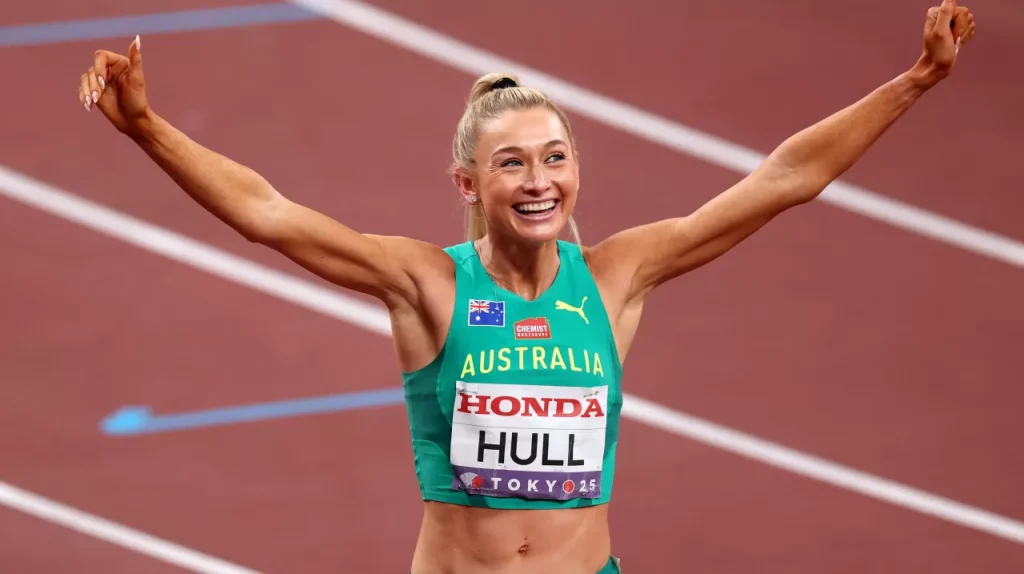
Jess Hull could also be in that 800 group – she was a finalist in the world championships last year – were it not for her even greater achievements at 1500. Linden Hall became the first Australian under four minutes on 1 April 2021. Now, coming up to five years later, Hull holds the national record at 3:50.83 while Georgia Griffith, Billings and Caldwell have also gone sub-4.
By comparison, the steeple and longer track distances have been in a lull, though there’s green shoots with the performance of Robinson in Tokyo along with the ninth place in the 10,000 by Lauren Ryan.
The jumps have been a strong area almost throughout the 25 years since Sydney 2000 (and before that, too). Nina Kennedy, Nicola Olyslagers and Eleanor Patterson are all world champions and Kennedy is reigning Olympic champ too. Kurtis Marschall has Olympic and world championship medals in the men’s pole vault. Long jump has lost a few top competitors but then there’s Adcock’s performances through 2025 to savour.
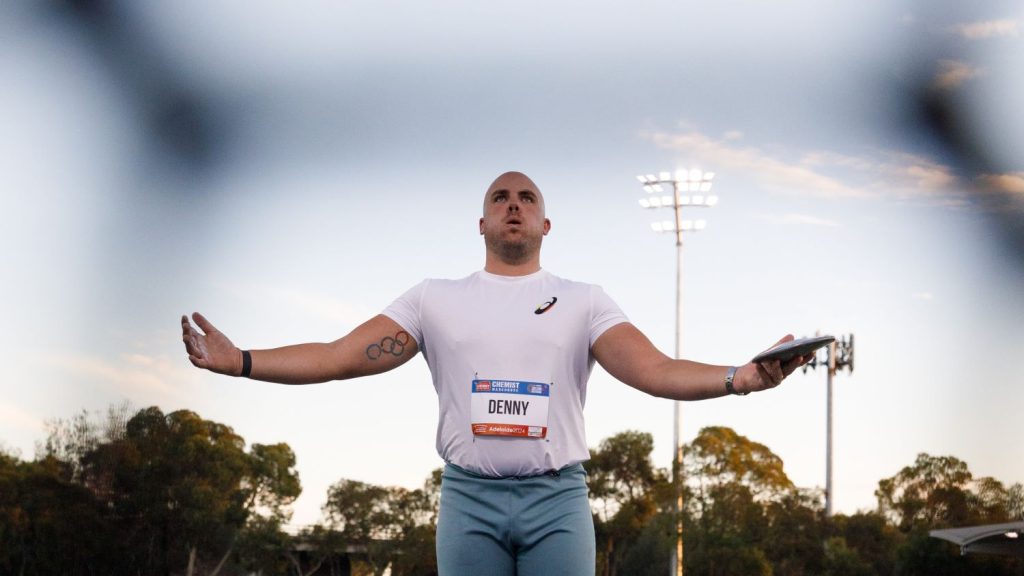
Matt Denny and Mckenzie Little continue to excel in the throws. Denny is one of a kind at the moment, but Little continues a run of Australian throwing success from Danni Stevens in the discus to fellow-javelinists Kim Mickle, Kelsey-Lee Barber and Kathryn Mitchell.
You’d have to say that with Brisbane 2032 on the far horizon, athletics in Australia is in a good place. There’s depth and breadth to our current performers and performances.